VersusScout


43 facts in comparison
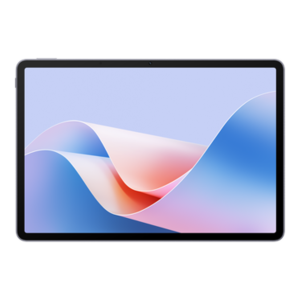
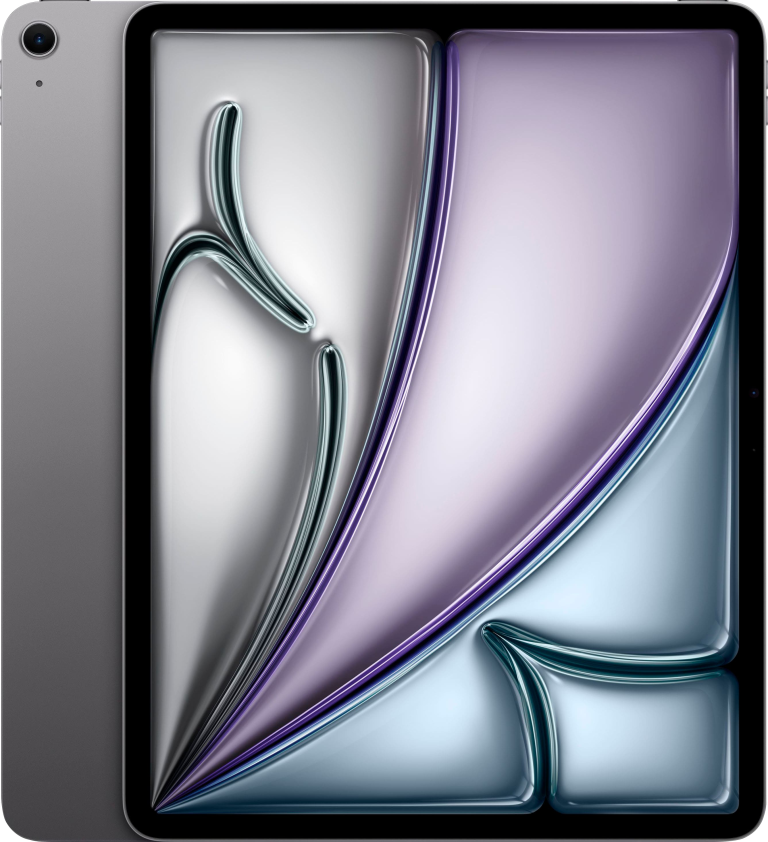
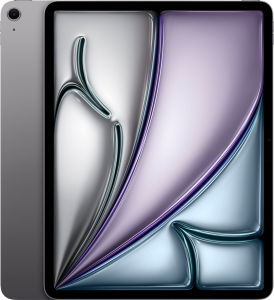
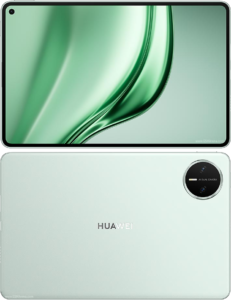
Apple iPad Air 13 (2025) vs Huawei MatePad Air (2026)
This comparison puts the Apple iPad Air 13 (2025) and Huawei MatePad Air (2026) side by side — two tablets measured against the same 43-spec sheet, with every meaningful gap scored and explained. On our weighted VS Score the Huawei MatePad Air (2026) finishes ahead, 88 to 46 — a decisive result.
The most consequential difference is OLED display — the Huawei MatePad Air (2026) has it, the Apple iPad Air 13 (2025) does not. A transparency note before you dive in: the spec sheets are Apple iPad Air 13 (2025) 91% and Huawei MatePad Air (2026) 86% complete. Anything unverified shows as Unknown and is left out of the scores — we never estimate a missing value.
Where the Apple iPad Air 13 (2025) beats the Huawei MatePad Air (2026)
- Has biometric unlock ?
- 1 " more screen size ?13 " vs 12 "
- 0.4 f/ less front camera aperture ?2 f/ vs 2.4 f/
- Has 5G support ?
- 0.1 more Bluetooth version ?5.3 vs 5.2
- Has compass ?
Where the Huawei MatePad Air (2026) beats the Apple iPad Air 13 (2025)
- 107 g less weight ?509 g vs 616 g
- 0.8 mm less thickness ?5.3 mm vs 6.1 mm
- 68 px more resolution ?2,800 px vs 2,732 px
- 15 ppi more pixel density ?279 ppi vs 264 ppi
- 84 Hz more refresh rate ?144 Hz vs 60 Hz
- 600 nits more peak brightness ?1,200 nits vs 600 nits
- Has OLED display ?
- 128 GB more internal storage ?256 GB vs 128 GB
- 395 mAh more battery capacity ?10,100 mAh vs 9,705 mAh
Key real-world differences
The spec sheet pulls in both directions. These are the gaps big enough to shape the decision — with the actual figures, and what each one means in real-world use.
- OLED displayDisplayNo vs Yes — only the Huawei MatePad Air (2026) has it
OLED panels offer deeper blacks and better contrast than LCD.
- Refresh rateDisplay60 Hz vs 144 Hz — 2.4× more for the Huawei MatePad Air (2026)
A higher refresh rate produces smoother motion and scrolling.
The step from 60 to 120 Hz is obvious; differences above 120 Hz are far subtler in everyday use.
- Rear cameraCameras12 MP vs 50 MP — 4.2× more for the Huawei MatePad Air (2026)
A higher megapixel count can capture more detail.
More megapixels can capture more detail, but sensor size, optics and image processing decide most of what a photo actually looks like.
- Internal storagePerformance128 GB vs 256 GB — 2× more for the Huawei MatePad Air (2026)
More storage holds more apps, media and files.
- Biometric unlockDesignYes vs No — only the Apple iPad Air 13 (2025) has it
Unlock with a fingerprint or face scan.
Which one should you buy?
There is no single answer — it depends on what you will actually use it for. Match your priority to the pick below.
- Best for display Huawei MatePad Air (2026) takes the category 81 to 25 — driven by OLED display (No vs Yes).
- Best for performance Huawei MatePad Air (2026) takes the category 100 to 63 — driven by internal storage (128 GB vs 256 GB).
- Best for battery Huawei MatePad Air (2026) takes the category 100 to 45 — driven by wired charging (36.59 W vs 66 W).
- Best for design Huawei MatePad Air (2026) takes the category 86 to 14.
- Best for cameras Huawei MatePad Air (2026) takes the category 100 to 60 — driven by rear camera (12 MP vs 50 MP).
- The safe all-rounder Huawei MatePad Air (2026) wins more of the categories that carry real weight, topping the overall VS Score at 88.
Where each one falls short
Apple iPad Air 13 (2025)
- OLED display: No vs Yes
- Refresh rate: 60 Hz vs 144 Hz
- Rear camera: 12 MP vs 50 MP
- 4 specs are unreported (shown as Unknown) and excluded from its scores.
Huawei MatePad Air (2026)
- Biometric unlock: Yes vs No
- 5G support: Yes vs No
- Compass: Yes vs No
- 6 specs are unreported (shown as Unknown) and excluded from its scores.
What matters to you?
Drag the sliders to weight each category and re-rank the products to suit your priorities.
Score breakdown
How the VS Score works — and what it can’t tell you
Every measurable spec is scored relative to this matchup: the best value here earns 100%, the worst 0%, and everything between scales linearly. Each spec then counts according to an editorial weight that reflects real-world impact — a battery-capacity gap moves the score far more than a colour-options list. The category scores above are the weighted results inside each group, and the overall VS Score rolls all of them together; the evidence line under each category names the specs that actually decided it.
Unknown values are never estimated. A spec a product doesn’t report simply drops out of that product’s scoring — it isn’t penalised with a guess — and a spec only one side reports can never produce a “win”. The trade-off is honest but real: a thinner spec sheet means a score built on fewer data points, which is why the completeness figures are disclosed under About this data.
Most importantly: a spec-sheet lead is not the same as a better product. Megapixels, gigahertz and benchmark points describe capacity, not experience — image processing, software optimisation, thermals, haptics and ergonomics decide how a device actually feels, and no table captures reliability or long-term support quality. Treat the scores as a structured summary of what can be measured, read the caveats under each key difference, and use the weight tuner to re-rank the comparison by what matters to you.
Design
A lighter tablet is more comfortable to hold.
A thinner tablet is easier to carry.
The frame and back materials of the device.
Unlock with a fingerprint or face scan.
The colour options the tablet is sold in.
Display
A larger screen is better for media and productivity.
The vertical pixel count; higher is sharper.
More pixels per inch produce crisper text and images.
A higher refresh rate produces smoother motion and scrolling.
Higher peak brightness is easier to read in bright light.
The underlying panel technology (e.g. OLED, IPS).
OLED panels offer deeper blacks and better contrast than LCD.
A laminated screen reduces glare and stylus parallax.
The ratio between the brightest white and darkest black.
Performance
The system-on-chip that powers the device.
More RAM keeps more apps running smoothly at once.
More storage holds more apps, media and files.
The storage standard (e.g. UFS 4.0); newer is faster.
Storage can be expanded with a memory card.
A synthetic score estimating overall performance.
Multi-core CPU benchmark score; higher is faster.
Single-core CPU benchmark score; higher is faster.
The memory standard (e.g. LPDDR5X); newer is faster.
Battery
A larger battery generally lasts longer between charges.
Estimated hours of mixed use on a charge.
Higher wattage charges the battery faster.
A reversible, widely compatible charging and data port.
The battery chemistry (e.g. Li-Po, Li-Ion).
Cameras
A higher megapixel count can capture more detail.
A higher resolution front camera improves video calls.
Captures high-resolution 4K footage.
A lower f-number lets in more light for video calls.
Productivity & connectivity
Works with an active stylus for notes and drawing.
Pairs with a dedicated keyboard accessory.
Connects to fast 5G mobile networks on the go.
The Wi-Fi generation supported; later is faster.
Multiple speakers deliver richer, more immersive sound.
A newer Bluetooth version improves range and efficiency.
Enables contactless pairing and payments.
The software platform the device runs.
Sensors
Detects motion and orientation for auto-rotate.
Senses rotation for gaming and photography.
A magnetometer for navigation and maps.
About this data
- Specifications are compiled from each manufacturer’s official spec sheet, cross-checked against trusted specification databases, and normalised into one schema so identical things are compared identically.
- Specifications last verified July 30, 2026.
- Data completeness: Apple iPad Air 13 (2025) 91% and Huawei MatePad Air (2026) 86% of the 43 specs in this category. Anything we could not verify is shown as Unknown — never estimated — and is excluded from all scores.
- Prices and availability come from live retailer feeds via our shopping partners and refresh throughout the day; a missing price means no partner currently lists the product, not that it is discontinued.
- Want the full picture? Our editorial guidelines explain how we research products, weight the scores and stay independent.
- Spotted an error in a spec? Tell us and we will correct the sheet.
What reviewers say
The bottom line
The Huawei MatePad Air (2026) is the clear winner, scoring 88 to 46 on our VS Score. It leads on Design, Display and Performance. The Apple iPad Air 13 (2025) answers back with stronger Sensors. Pick the Huawei MatePad Air (2026) unless Sensors matters most to you — then the Apple iPad Air 13 (2025) is the smarter buy.

Latest comparisons
 vs
vs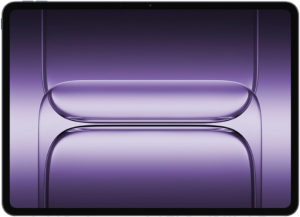
 vs
vs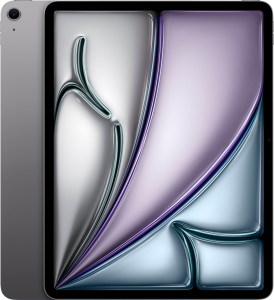 vs
vs
 vs
vs
 vs
vs vs
vs vsvsvs
 vs
vs vs
vs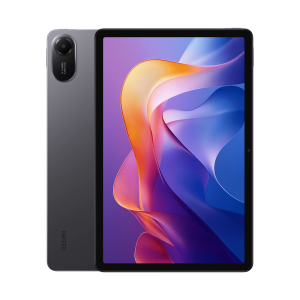 vs
vs