VersusScout

27 facts in comparison
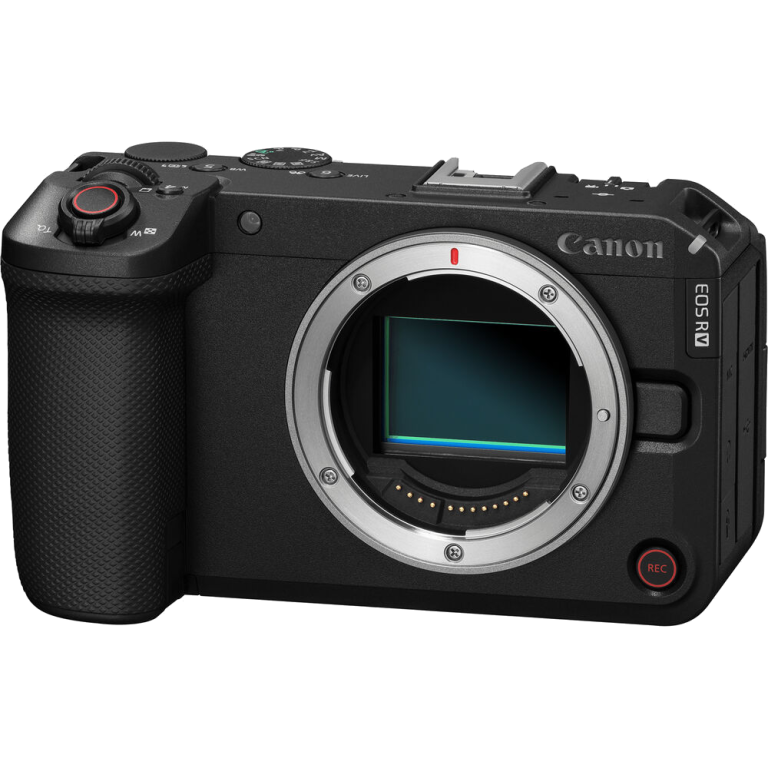
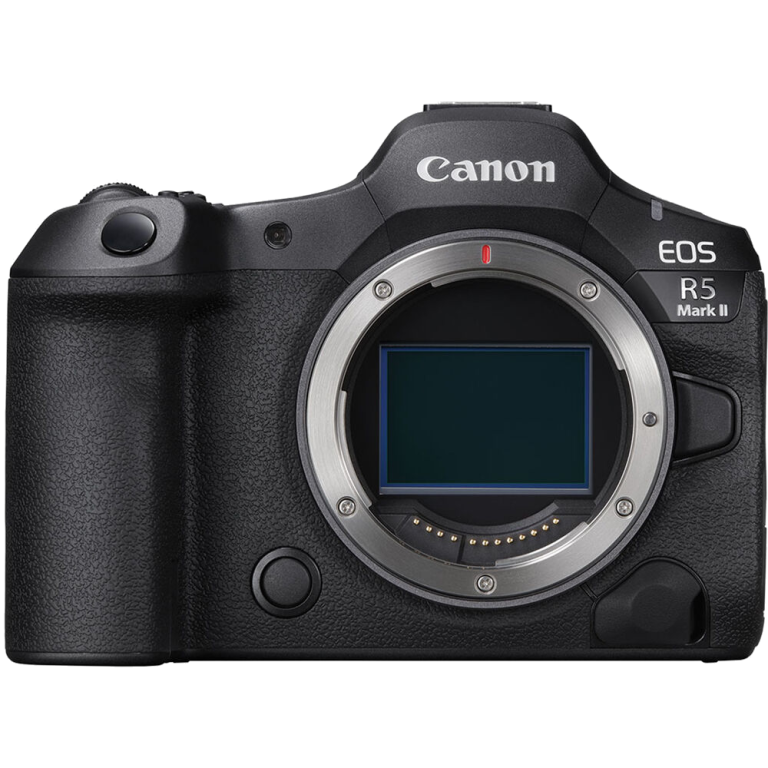
Canon R6 V vs Canon R5 Mark II
This comparison puts the Canon R6 V and Canon R5 Mark II side by side — two cameras measured against the same 27-spec sheet, with every meaningful gap scored and explained. On our weighted VS Score the Canon R6 V finishes ahead, 80 to 70 — a solid lead.
The single biggest measurable gap is resolution: 32 MP vs 45 MP.
Where the Canon R6 V beats the Canon R5 Mark II
- 12,800 more max ISO ?64,000 vs 51,200
- 10 fps more continuous shooting ?40 fps vs 30 fps
- 157 more autofocus points ?6,097 vs 5,940
- 58 g less weight ?688 g vs 746 g
- 20 shots more battery life ?640 shots vs 620 shots
Where the Canon R5 Mark II beats the Canon R6 V
- 13 MP more resolution ?45 MP vs 32 MP
- 384 p more max video resolution ?4,320 p vs 3,936 p
Key real-world differences
The spec sheet pulls in both directions. These are the gaps big enough to shape the decision — with the actual figures, and what each one means in real-world use.
- ResolutionSensor32 MP vs 45 MP — 29% more for the Canon R5 Mark II
A higher megapixel count captures more detail.
More megapixels can capture more detail, but sensor size, optics and image processing decide most of what a photo actually looks like.
- Continuous shootingPerformance40 fps vs 30 fps — 25% more for the Canon R6 V
A higher burst rate catches fast action.
- Max ISOSensor64,000 vs 51,200 — 20% more for the Canon R6 V
A higher native ISO ceiling helps in low light.
- Max video resolutionVideo3,936 p vs 4,320 p — 9% more for the Canon R5 Mark II
The highest video resolution the camera can record.
On paper this is a win, but a gap this small is unlikely to be noticeable in daily use.
- WeightBody & handling688 g vs 746 g — 8% less for the Canon R6 V
A lighter body is easier to carry all day.
On paper this is a win, but a gap this small is unlikely to be noticeable in daily use.
Which one should you buy?
There is no single answer — it depends on what you will actually use it for. Match your priority to the pick below.
- Best for body & handling Canon R6 V takes the category 100 to 66 — driven by weight (688 g vs 746 g).
- Best for video Canon R5 Mark II takes the category 100 to 65 — driven by max video resolution (3,936 p vs 4,320 p).
- Best for sensor Canon R5 Mark II takes the category 78 to 56 — driven by resolution (32 MP vs 45 MP).
- Best for performance Canon R6 V takes the category 100 to 29 — driven by continuous shooting (40 fps vs 30 fps).
- The safe all-rounder Canon R6 V wins more of the categories that carry real weight, topping the overall VS Score at 80.
Where each one falls short
Canon R6 V
- Resolution: 32 MP vs 45 MP
- 2 specs are unreported (shown as Unknown) and excluded from its scores.
Canon R5 Mark II
- Continuous shooting: 40 fps vs 30 fps
- Max ISO: 64,000 vs 51,200
- 1 spec is unreported (shown as Unknown) and excluded from its scores.
What matters to you?
Drag the sliders to weight each category and re-rank the products to suit your priorities.
Score breakdown
How the VS Score works — and what it can’t tell you
Every measurable spec is scored relative to this matchup: the best value here earns 100%, the worst 0%, and everything between scales linearly. Each spec then counts according to an editorial weight that reflects real-world impact — a battery-capacity gap moves the score far more than a colour-options list. The category scores above are the weighted results inside each group, and the overall VS Score rolls all of them together; the evidence line under each category names the specs that actually decided it.
Unknown values are never estimated. A spec a product doesn’t report simply drops out of that product’s scoring — it isn’t penalised with a guess — and a spec only one side reports can never produce a “win”. The trade-off is honest but real: a thinner spec sheet means a score built on fewer data points, which is why the completeness figures are disclosed under About this data.
Most importantly: a spec-sheet lead is not the same as a better product. Megapixels, gigahertz and benchmark points describe capacity, not experience — image processing, software optimisation, thermals, haptics and ergonomics decide how a device actually feels, and no table captures reliability or long-term support quality. Treat the scores as a structured summary of what can be measured, read the caveats under each key difference, and use the weight tuner to re-rank the comparison by what matters to you.
Sensor
A higher megapixel count captures more detail.
The sensor format (e.g. Full-frame, APS-C).
The sensor technology (e.g. BSI-CMOS, stacked).
A higher native ISO ceiling helps in low light.
The native ISO sensitivity range of the sensor.
IBIS steadies handheld photos and video.
Performance
A higher burst rate catches fast action.
More AF points give wider, more reliable focus coverage.
Automatically tracks eyes for sharp portraits and wildlife.
Video
The highest video resolution the camera can record.
Higher 4K frame rates enable smoother slow motion.
Captures richer colour for grading.
Flat Log footage preserves dynamic range for editing.
A higher bitrate records more detail with fewer compression artefacts.
A 3.5mm mic jack for better audio when filming.
Monitor audio while recording through a headphone jack.
Body & handling
A lighter body is easier to carry all day.
Resists dust and moisture for shooting outdoors.
A flip-out screen helps with vlogging and awkward angles.
A higher-resolution EVF gives a clearer preview.
Two card slots add backup and overflow storage.
More shots per charge for longer outings.
A touch-sensitive screen for focus and menu control.
Transfer photos and control the camera wirelessly.
A low-power link for remote control and geotagging.
A reversible USB-C port for fast transfer and charging.
The lens mount system the camera uses.
About this data
- Specifications are compiled from each manufacturer’s official spec sheet, cross-checked against trusted specification databases, and normalised into one schema so identical things are compared identically.
- Specifications last verified July 6, 2026.
- Data completeness: Canon R6 V 93% and Canon R5 Mark II 96% of the 27 specs in this category. Anything we could not verify is shown as Unknown — never estimated — and is excluded from all scores.
- Prices and availability come from live retailer feeds via our shopping partners and refresh throughout the day; a missing price means no partner currently lists the product, not that it is discontinued.
- Want the full picture? Our editorial guidelines explain how we research products, weight the scores and stay independent.
- Spotted an error in a spec? Tell us and we will correct the sheet.
What reviewers say
The bottom line
The Canon R6 V comes out ahead, scoring 80 to 70 on our VS Score. It leads on Performance and Body & handling. The Canon R5 Mark II answers back with stronger Sensor and Video. Pick the Canon R6 V unless Sensor and Video matters most to you — then the Canon R5 Mark II is the smarter buy.
Latest comparisons
 vs
vs vs
vs vs
vs
 vsvs
vsvs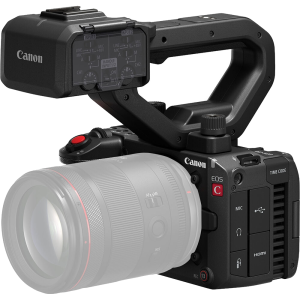 vsvsvs
 vs
vs
 vs
vs