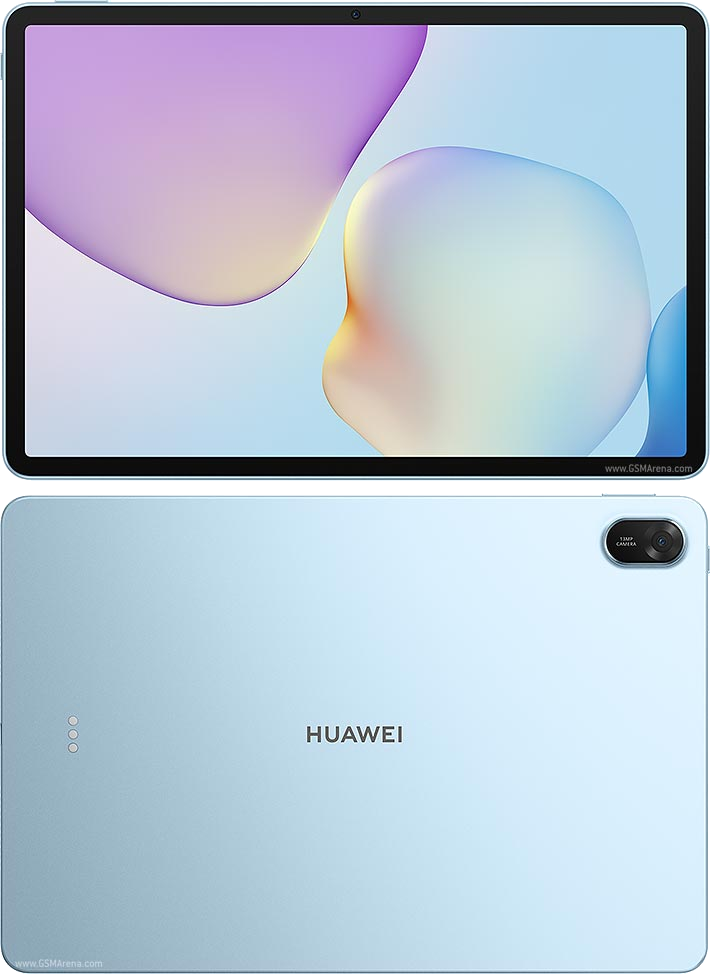
Huawei MatePad 11.5 (2026) review
This review measures the Huawei MatePad 11.5 (2026) against the full 43-spec sheet we track for tablets, comparing it like for like with the 56 other models in our database. It earns a VS Score of 40 out of 100 — the weighted result of every verified specification measured against the class average.
On the spec sheet it is strongest in battery and weakest in sensors. Its clearest single advantage over the class average: 760.63 mAh more battery capacity — 10,100 mAh vs 9,339.37 mAh (avg). None of our retail partners currently lists the Huawei MatePad 11.5 (2026), so availability may be limited; a missing price never affects the VS Score. A transparency note: this spec sheet is 84% complete. Anything unverified shows as Unknown and is left out of the score — we never estimate a missing value.
Category strengths
Where the Huawei MatePad 11.5 (2026) beats the average
- 760.63 mAh more battery capacity ?10,100 mAh vs 9,339.37 mAh (avg)
- Has stylus support ?
- 14.04 g less weight ?515 g vs 529.04 g (avg)
- 0.32 mm less thickness ?6.1 mm vs 6.42 mm (avg)
- Has accelerometer ?
- 2.18 Hz more refresh rate ?120 Hz vs 117.82 Hz (avg)
Where the Huawei MatePad 11.5 (2026) trails the average
- 52.77 GB less internal storage ?128 GB vs 180.77 GB (avg)
- No gyroscope ?
- No compass ?
- No records 4K video ?
- 253.02 nits less peak brightness ?600 nits vs 853.02 nits (avg)
- 4.51 MP less rear camera ?13 MP vs 17.51 MP (avg)
- 2.42 MP less front camera ?8 MP vs 10.42 MP (avg)
- No biometric unlock ?
- No 5G support ?
- No OLED display ?
Specifications
Quality bars are generated automatically against 56 other tablets.
Design
A lighter tablet is more comfortable to hold.
A thinner tablet is easier to carry.
The frame and back materials of the device.
Unlock with a fingerprint or face scan.
The colour options the tablet is sold in.
Display
A larger screen is better for media and productivity.
The vertical pixel count; higher is sharper.
More pixels per inch produce crisper text and images.
A higher refresh rate produces smoother motion and scrolling.
Higher peak brightness is easier to read in bright light.
The underlying panel technology (e.g. OLED, IPS).
OLED panels offer deeper blacks and better contrast than LCD.
A laminated screen reduces glare and stylus parallax.
The ratio between the brightest white and darkest black.
Performance
The system-on-chip that powers the device.
More RAM keeps more apps running smoothly at once.
More storage holds more apps, media and files.
The storage standard (e.g. UFS 4.0); newer is faster.
Storage can be expanded with a memory card.
A synthetic score estimating overall performance.
Multi-core CPU benchmark score; higher is faster.
Single-core CPU benchmark score; higher is faster.
The memory standard (e.g. LPDDR5X); newer is faster.
Battery
A larger battery generally lasts longer between charges.
Estimated hours of mixed use on a charge.
Higher wattage charges the battery faster.
A reversible, widely compatible charging and data port.
The battery chemistry (e.g. Li-Po, Li-Ion).
Cameras
A higher megapixel count can capture more detail.
A higher resolution front camera improves video calls.
Captures high-resolution 4K footage.
A lower f-number lets in more light for video calls.
Productivity & connectivity
Works with an active stylus for notes and drawing.
Pairs with a dedicated keyboard accessory.
Connects to fast 5G mobile networks on the go.
The Wi-Fi generation supported; later is faster.
Multiple speakers deliver richer, more immersive sound.
A newer Bluetooth version improves range and efficiency.
Enables contactless pairing and payments.
The software platform the device runs.
Sensors
Detects motion and orientation for auto-rotate.
Senses rotation for gaming and photography.
A magnetometer for navigation and maps.
How the VS Score works — and what it can’t tell you
Every measurable spec is scored against the average of all the tablets we track: matching the class average scores 50, clearly beating it climbs towards 100, and each spec counts according to an editorial weight that reflects real-world impact — a battery-capacity gap moves the score far more than a colour-options list. The quality bars on the spec cards above show where this model sits inside the full range for its class, and the overall VS Score rolls every weighted result into one number.
Unknown values are never estimated. A spec this product doesn’t report simply drops out of its scoring — it isn’t penalised with a guess — but a thinner spec sheet does mean a score built on fewer data points, which is why completeness is disclosed under About this data.
Most importantly: a spec-sheet lead is not the same as a better product. Megapixels, gigahertz and benchmark points describe capacity, not experience — image processing, software optimisation, thermals, haptics and ergonomics decide how a device actually feels, and no table captures reliability or long-term support quality. Treat the VS Score as a structured summary of what can be measured, not a substitute for your own priorities.
About this data
- Specifications are compiled from each manufacturer’s official spec sheet, cross-checked against trusted specification databases, and normalised into one schema so identical things are compared identically.
- Specifications last verified July 14, 2026.
- Data completeness: 36 of the 43 specs in this category are verified (84%). Anything we could not verify is shown as Unknown — never estimated — and is excluded from the score.
- Prices and availability come from live retailer feeds via our shopping partners and refresh throughout the day; a missing price means no partner currently lists the product, not that it is discontinued.
- Want the full picture? Our editorial guidelines explain how we research products, weight the scores and stay independent.
- Spotted an error in a spec? Tell us and we will correct the sheet.
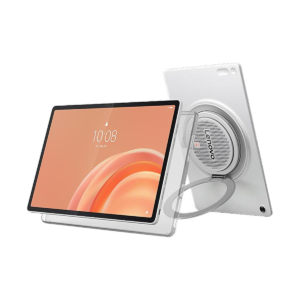
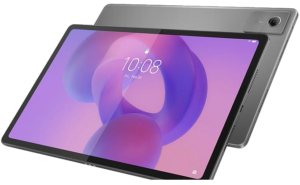
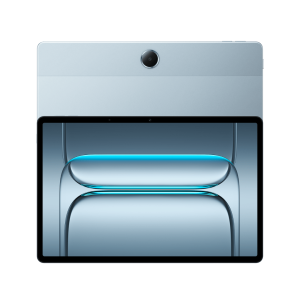
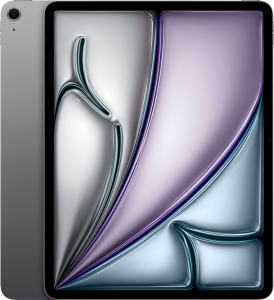
Tablets with similar specs to the Huawei MatePad 11.5 (2026)
Ratings & reviews
No reviews yet. Be the first to share your experience.
The bottom line
The Huawei MatePad 11.5 (2026) earns a VS Score of 40, trailing most of the 57 tablets we compare here, at least on the spec sheet. It stands out for 760.63 mAh more battery capacity, has stylus support and 14.04 g less weight. Just be aware of 52.77 GB less internal storage and no gyroscope before you buy. Weigh those trade-offs against what matters most to you.
The VS Score is generated automatically from the weighted specifications above, measured against all other tablets in our database. Treat it as a shortlisting guide — not a substitute for your own priorities.