VersusScout

28 facts in comparison
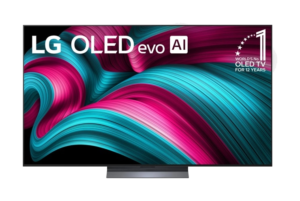
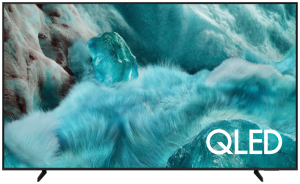
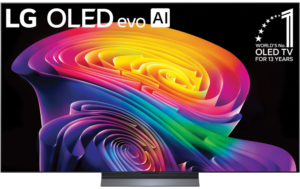
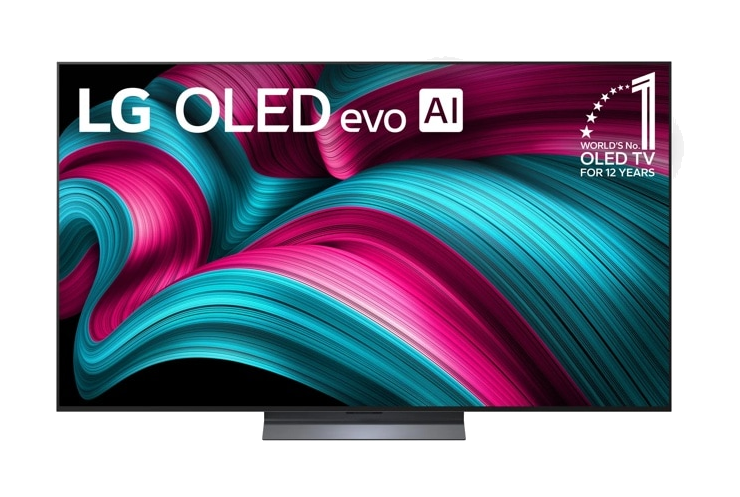
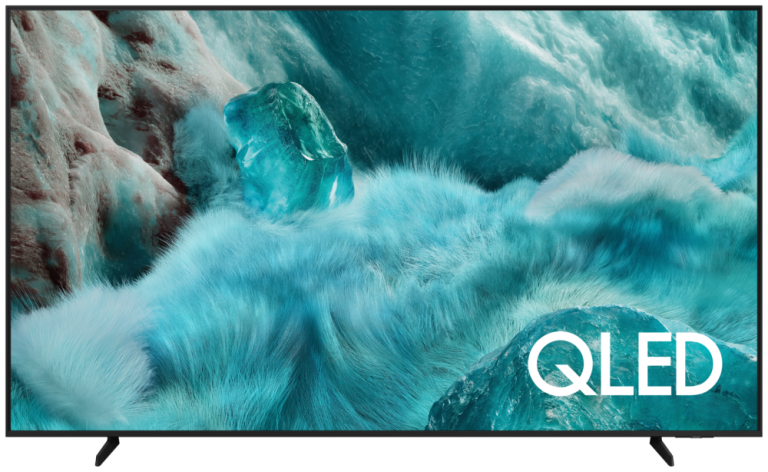
LG C5 OLED vs Samsung Q7F 2025
This comparison puts the LG C5 OLED and Samsung Q7F 2025 side by side — two TVs measured against the same 28-spec sheet, with every meaningful gap scored and explained. On our weighted VS Score the LG C5 OLED finishes ahead, 94 to 43 — a decisive result.
The most consequential difference is HDMI 2.1 — the LG C5 OLED has it, the Samsung Q7F 2025 does not. None of our retail partners currently lists the Samsung Q7F 2025, so availability may be limited and price cannot factor into this comparison. A transparency note before you dive in: the spec sheets are LG C5 OLED 96% and Samsung Q7F 2025 79% complete. Anything unverified shows as Unknown and is left out of the scores — we never estimate a missing value.
Where the LG C5 OLED beats the Samsung Q7F 2025
- 10 " more screen size ?65 " vs 55 "
- 84 Hz more refresh rate ?144 Hz vs 60 Hz
- Has HDMI 2.1 ?
- Has variable refresh rate (VRR) ?
- Has 4K 120Hz support ?
- Has FreeSync ?
- 20 W more speaker power ?40 W vs 20 W
- 1 more HDMI ports ?4 vs 3
- 4 more HDMI 2.1 ports ?4 vs 0
Where the Samsung Q7F 2025 beats the LG C5 OLED
- Has HDR10, HDR10+, HLG ?
Key real-world differences
The spec sheet pulls in both directions. These are the gaps big enough to shape the decision — with the actual figures, and what each one means in real-world use.
- HDMI 2.1GamingYes vs No — only the LG C5 OLED has it
Carries 4K/120Hz and the latest gaming features.
- Variable refresh rate (VRR)GamingYes vs No — only the LG C5 OLED has it
Syncs the display to the game for tear-free motion.
The step from 60 to 120 Hz is obvious; differences above 120 Hz are far subtler in everyday use.
- Refresh ratePicture144 Hz vs 60 Hz — 2.4× more for the LG C5 OLED
A higher refresh rate is smoother for sport and gaming.
The step from 60 to 120 Hz is obvious; differences above 120 Hz are far subtler in everyday use.
- HDR formatsPictureDolby Vision vs HDR10, HDR10+, HLG — advantage Samsung Q7F 2025
Support for more HDR formats means better contrast in more content.
- Speaker powerAudio40 W vs 20 W — 2× more for the LG C5 OLED
Higher total speaker power fills larger rooms.
Which one should you buy?
There is no single answer — it depends on what you will actually use it for. Match your priority to the pick below.
- Best for picture LG C5 OLED takes the category 87 to 54 — driven by refresh rate (144 Hz vs 60 Hz).
- Best for gaming LG C5 OLED takes the category 100 to 14 — driven by HDMI 2.1 (Yes vs No).
- Best for connectivity LG C5 OLED takes the category 100 to 32 — driven by HDMI 2.1 ports (4 vs 0).
- Best for audio LG C5 OLED takes the category 100 to 33 — driven by speaker power (40 W vs 20 W).
- The safe all-rounder LG C5 OLED wins more of the categories that carry real weight, topping the overall VS Score at 94.
Where each one falls short
LG C5 OLED
- HDR formats: Dolby Vision vs HDR10, HDR10+, HLG
- 1 spec is unreported (shown as Unknown) and excluded from its scores.
Samsung Q7F 2025
- HDMI 2.1: Yes vs No
- Variable refresh rate (VRR): Yes vs No
- Refresh rate: 144 Hz vs 60 Hz
- 6 specs are unreported (shown as Unknown) and excluded from its scores.
What matters to you?
Drag the sliders to weight each category and re-rank the products to suit your priorities.
Score breakdown
How the VS Score works — and what it can’t tell you
Every measurable spec is scored relative to this matchup: the best value here earns 100%, the worst 0%, and everything between scales linearly. Each spec then counts according to an editorial weight that reflects real-world impact — a battery-capacity gap moves the score far more than a colour-options list. The category scores above are the weighted results inside each group, and the overall VS Score rolls all of them together; the evidence line under each category names the specs that actually decided it.
Unknown values are never estimated. A spec a product doesn’t report simply drops out of that product’s scoring — it isn’t penalised with a guess — and a spec only one side reports can never produce a “win”. The trade-off is honest but real: a thinner spec sheet means a score built on fewer data points, which is why the completeness figures are disclosed under About this data.
Most importantly: a spec-sheet lead is not the same as a better product. Megapixels, gigahertz and benchmark points describe capacity, not experience — image processing, software optimisation, thermals, haptics and ergonomics decide how a device actually feels, and no table captures reliability or long-term support quality. Treat the scores as a structured summary of what can be measured, read the caveats under each key difference, and use the weight tuner to re-rank the comparison by what matters to you.
Picture
A larger screen is more immersive.
The vertical pixel count; higher is sharper (4K, 8K).
The panel technology (e.g. OLED, QLED, Mini-LED).
A higher refresh rate is smoother for sport and gaming.
Higher brightness makes HDR highlights pop.
More dimming zones improve contrast and black levels.
Wider DCI-P3 gamut coverage means more vivid, accurate HDR colour.
Support for more HDR formats means better contrast in more content.
Gaming
Carries 4K/120Hz and the latest gaming features.
Syncs the display to the game for tear-free motion.
Switches to game mode automatically.
Drives 4K at 120Hz for the smoothest console and PC gaming.
AMD FreeSync variable refresh rate for tear-free PC and console play.
Lower input lag feels more responsive when gaming.
Audio
Higher total speaker power fills larger rooms.
Adds spatial, three-dimensional audio in supported content.
Passes lossless audio to a soundbar or receiver over HDMI.
Smart features
The smart-TV platform (e.g. Google TV, webOS).
Control the TV and search by voice.
Stream from Apple devices to the TV.
Cast content from phones and laptops without a dongle.
The VESA wall-mount hole pattern (e.g. 300 x 300 mm).
Connectivity
More HDMI ports connect more devices.
More full-bandwidth HDMI 2.1 ports connect more 4K/120Hz sources.
USB ports for media playback and accessories.
The Wi-Fi generation supported; later is faster.
Pair wireless headphones or speakers.
A wired network port for stable streaming.
About this data
- Specifications are compiled from each manufacturer’s official spec sheet, cross-checked against trusted specification databases, and normalised into one schema so identical things are compared identically.
- Specifications last verified July 30, 2026.
- Data completeness: LG C5 OLED 96% and Samsung Q7F 2025 79% of the 28 specs in this category. Anything we could not verify is shown as Unknown — never estimated — and is excluded from all scores.
- Prices and availability come from live retailer feeds via our shopping partners and refresh throughout the day; a missing price means no partner currently lists the product, not that it is discontinued.
- Want the full picture? Our editorial guidelines explain how we research products, weight the scores and stay independent.
- Spotted an error in a spec? Tell us and we will correct the sheet.
Where to buy
No price is available to track yet.
Prices and availability may change. Check the retailer before buying. We may earn a commission on purchases.
What reviewers say
The bottom line
The LG C5 OLED is the clear winner, scoring 94 to 43 on our VS Score. It leads on Picture, Gaming and Audio.