
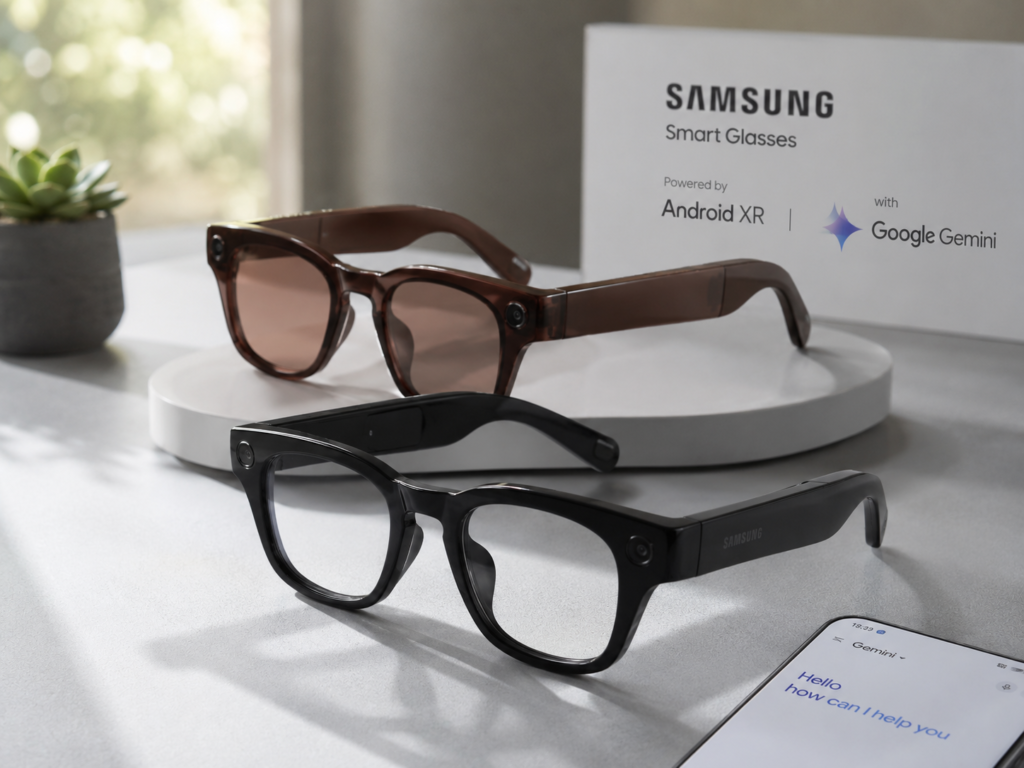
Samsung has officially stepped into the smart glasses market. The company revealed its first intelligent eyewear on July 22, 2026, after working with Google, Qualcomm, Gentle Monster, and Warby Parker.
At first glance, the glasses look much closer to normal eyewear than a bulky mixed-reality headset. Still, Samsung has fitted plenty of technology inside the slim frames. The glasses include Gemini AI, a built-in camera, microphones, speakers, and touch controls.
Samsung claims the eyewear can run for up to nine hours on one charge. The included charging case can then deliver up to seven extra full charges. So, in ideal conditions, owners could get several days of use before plugging the case into a power source.
That sounds promising, but the real appeal comes from how the glasses fit into daily life. Instead of replacing a phone, they act as a hands-free companion. Users can ask questions, hear directions, capture photos, translate conversations, and manage messages without constantly reaching into a pocket.
Samsung Smart Glasses Run on Android XR
Samsung created the glasses with Google and Qualcomm. They use Android XR, Google’s platform for headsets, smart glasses, and other extended-reality devices.
Gemini sits at the centre of the experience. Users can activate the assistant with a spoken command or by tapping the side of the frame. From there, Gemini can answer questions, read information aloud, handle calls, or interact with supported apps.
The camera gives Gemini visual context too. For example, a user could look at a shop and ask about its opening hours. In another case, the glasses could identify an object, explain a road sign, or provide information about a nearby place.
This visual support makes the glasses more capable than standard Bluetooth eyewear. Yet many features will still need a connected phone, mobile data, Wi-Fi, or access to cloud services.
Gemini Can See What the Wearer Sees
The camera is not limited to taking pictures. It lets Gemini understand what is in front of the wearer, which opens the door to more natural questions.
For example, someone could look at a restaurant menu and ask which dishes contain certain ingredients. A traveller could point their attention toward a sign and request a translation. Likewise, a user could ask Gemini to describe an unfamiliar device or object.
This sounds simple, but it removes several steps. Normally, a person would take out a phone, unlock it, open an app, and then point the camera. With smart glasses, the wearer can simply look and ask.
Of course, accuracy will matter. AI tools can misunderstand objects, signs, and spoken requests. So users should still check critical information, mainly medical instructions, ticket restrictions, legal notices, and payment details.
A Built-In Camera Captures Photos and Videos
The Samsung smart glasses can capture photos and videos from the wearer’s point of view. Users can start recording with a voice request or a physical control on the frame.
For parents, this could make it easier to save family moments without holding a phone. For travellers, it could help record a walk, museum visit, or scenic route. At work, the camera could capture a whiteboard or document for later reference.
Samsung says the glasses can collect useful details and send supported content to Samsung Notes. As a result, users could save meeting information without manually typing every point.
Gemini can work with captured images too. For example, a user may ask it to remove an unwanted object from the background or make a playful edit. The final options will depend on the connected device, account, app, and region.
Camera Privacy Needs Clear Rules
Camera-equipped glasses can make people uncomfortable. Unlike a phone, glasses point toward whatever the wearer is looking at, so people nearby may not know when recording starts.
For that reason, Samsung needs to make the camera indicator obvious. A small and easy-to-miss light would not be enough in many social settings.
The company has mentioned privacy controls and safeguards. Still, it has not published full details about the recording indicator, camera permissions, or privacy settings.
This is one area where Samsung cannot afford confusion. The glasses may work well on holiday or during outdoor activities, yet they could face restrictions inside offices, schools, medical centres, and private venues.
Local recording laws will matter too. Owners should check the rules in their country and avoid recording people without permission.
Battery Life Reaches Up to Nine Hours
Samsung says the glasses provide up to nine hours of use on a full charge. That figure gives them a chance of lasting through a typical workday or a long trip.
The charging case stores enough power for up to seven extra full charges. Based on Samsung’s maximum claims, the total reaches up to 72 hours:
9 hours per charge × 8 charges = up to 72 hours
The calculation includes the original charge inside the glasses and the seven charges held by the case.
Real-world battery life will likely be lower during heavy use. Camera recording, calls, music, navigation, and frequent Gemini requests all consume power. Weak network coverage can drain the battery faster too.
Even so, the case should make charging less stressful. Users can place the glasses inside during lunch, a car journey, or a short break.
Real Battery Life Will Depend on Usage
Nine hours is a useful headline figure, but smart glasses rarely perform the same way in every situation.
A user who mainly listens to notifications may get close to Samsung’s claim. By comparison, someone recording long videos and using live navigation may need a recharge much sooner.
The age of the battery will affect performance over time too. Heat, charging habits, brightness settings, and wireless connections can all change the final result.
Samsung has not confirmed how long a full recharge takes. It has not shared whether the case supports wireless charging either.
Those details may seem small now, but they matter for a product meant to stay on the user’s face for much of the day.
Qualcomm’s Snapdragon AR1 Gen 1 Powers the Glasses
The glasses use Qualcomm’s Snapdragon AR1 Gen 1 platform. The chip was created for compact smart eyewear, with support for AI tools, cameras, audio, connectivity, and touch input.
Samsung says it worked on power control and heat management for the narrow frame. That work matters, since heat near the temples or ears could quickly become uncomfortable.
Comfort will depend on more than temperature, though. Frame weight, balance, nose pressure, and ear support can decide whether people wear the glasses for nine hours or remove them after one.
Samsung has not confirmed the final weight. It has not listed the memory, storage, camera resolution, water-resistance rating, or charging speed either.
Buyers should wait for those specifications before deciding how well the glasses suit exercise, travel, work, or daily recording.
Live Translation Could Be a Standout Feature
Live translation may become one of the most useful parts of Samsung’s intelligent eyewear.
A user can look at a written sign, menu, or notice and ask Gemini to translate it. The glasses can then read the translated text through the built-in speakers.
Spoken translation is supported too. During a conversation, the glasses can listen to another language and provide a translated version to the wearer.
For travellers, this could feel far easier than holding a phone between two people. It could help during hotel check-ins, shopping trips, taxi rides, or short conversations with local residents.
Language support will differ by country. Translation errors can happen too. So users should treat the feature as helpful guidance rather than a perfect interpreter.
Navigation Keeps the Phone in a Pocket
The glasses can provide spoken turn-by-turn navigation through Gemini. Users can ask for directions, search for nearby places, or add a stop during a trip.
This setup could work well for walking routes. The wearer can keep looking ahead instead of checking a phone every few minutes.
The first models focus on audio rather than projected graphics. They do not place maps, arrows, or messages directly in front of the eye.
Google has described two types of Android XR glasses. Audio models will arrive first. Display models will follow later and show private visual information inside the lens.
That distinction is worth understanding before purchase. Samsung’s first glasses offer voice support, audio, camera input, and touch controls. They are not full augmented-reality glasses with floating screens.
Messages, Calls and Music Are Built In
Gemini can summarize long messages, read notifications aloud, send replies, and manage calls. Users can listen to music through the built-in speakers too, so separate earbuds may not be needed for casual listening.
Supported third-party apps can connect with the glasses. Google has demonstrated services such as Uber, DoorDash, and Mondly.
For example, a wearer could ask Gemini to start a supported order through the connected phone. The system would then request confirmation before a payment or purchase.
The wider Android software market is changing at the same time. Google is opening its platform more widely, and the move is covered in this report on how Google Play is opening its app catalogue to rival Android stores. That shift may give Android XR devices access to a broader mix of services over time.
Samsung says the glasses can pair with Android and iOS phones. Galaxy devices are still likely to receive the closest connection through Samsung Notes and other Galaxy services.
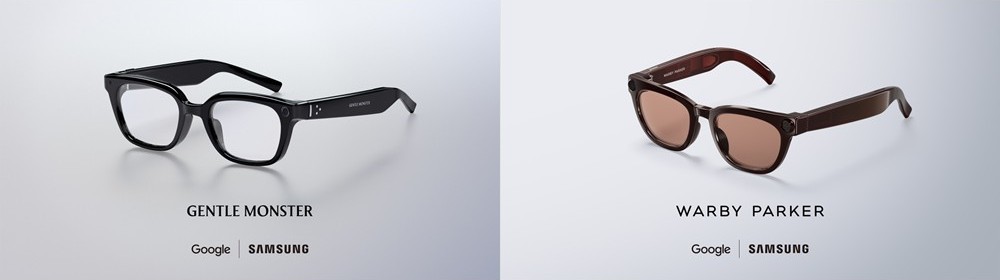
Gentle Monster and Warby Parker Designed the Frames
Samsung worked with Gentle Monster and Warby Parker rather than releasing a single technology-focused frame.
The Gentle Monster model uses a slim black design with a straight upper edge and rounded lower sections. It has a sharper, more fashion-led appearance.
The Warby Parker model comes with a brown frame and a slightly raised brow line. Its style looks closer to traditional prescription glasses.
These partnerships make sense. Smart glasses need to look normal enough for daily wear. Great software will not help much if the frame feels heavy or attracts unwanted attention.
Samsung says both eyewear brands helped improve pressure points near the forehead and ears. More colours, lenses, and styles are planned, though available choices will vary by market.
Samsung Has Not Announced the Price
Samsung and Google plan to release the first audio smart glasses in selected markets during autumn 2026. An exact launch date has not been announced.
The company has not confirmed pricing either. Regional availability, prescription lens support, repair services, replacement parts, and insurance options remain unclear.
Price will shape the product’s future. A reasonable price could attract Galaxy owners who want hands-free AI support. A high price could limit the glasses to technology fans and early buyers.
Samsung will need to explain what comes in the box too. Buyers will want to know whether every model includes the charging case, lens options, a protective pouch, and replacement nose pads.
Are Samsung Smart Glasses Worth Waiting For?
Samsung’s first smart glasses sound more practical than a large headset. They focus on tasks that already fit into daily routines, such as taking a picture, hearing directions, answering a call, translating a sign, or asking Gemini about something nearby.
The nine-hour battery claim is a strong starting point. The charging case adds flexibility, and the eyewear partnerships may help Samsung create frames that people feel comfortable wearing in public.
Still, several questions remain. Samsung needs to publish the price, weight, camera quality, water protection, repair rules, and prescription lens options. It also needs to explain the camera privacy system in plain terms.
My view is cautiously positive. The glasses seem useful rather than gimmicky, mainly for navigation, translation, calls, and quick photos. Still, the final value will depend on comfort and price. People will forgive a few software limits. They will not keep wearing glasses that feel heavy, run hot, or cost too much.