
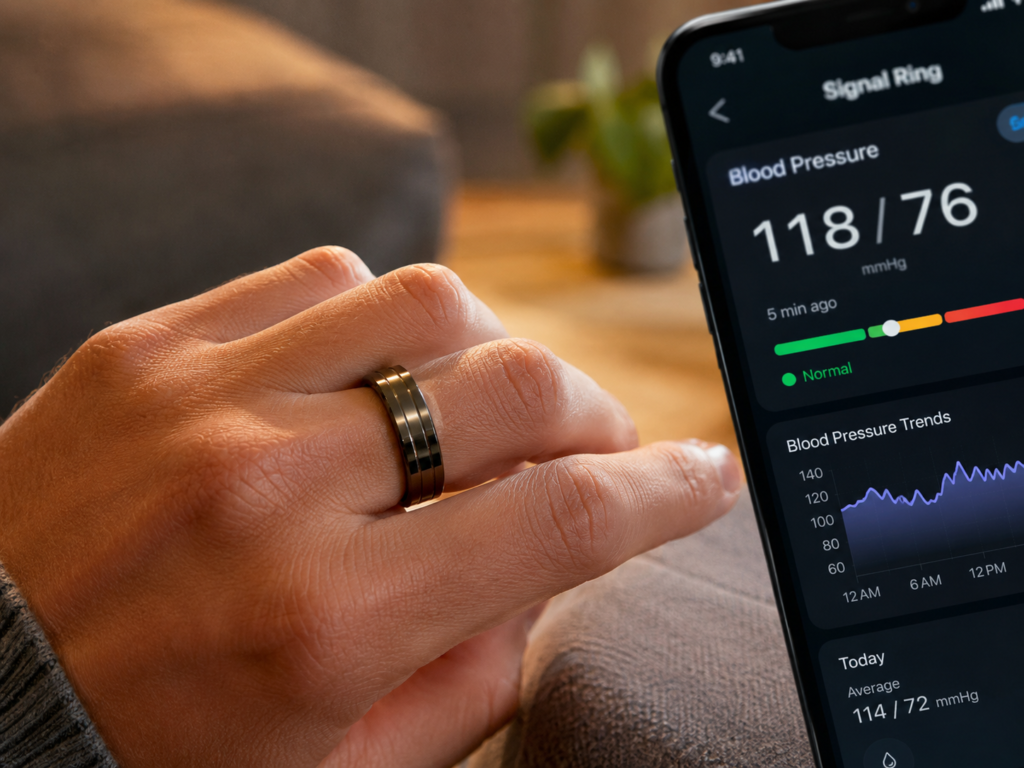
Blood pressure checks usually involve an inflatable cuff, a quiet room, and several minutes of careful positioning. Signal Ring wants to change that routine with a small titanium wearable that measures blood pressure from the finger.
Vital Signals announced the Signal Ring as a cuffless and calibration-free blood pressure tracker. According to the company, the ring can estimate systolic and diastolic blood pressure throughout the day. It can also provide on-demand readings without asking users to calibrate it against a traditional cuff.
That promise sounds exciting, especially for people who need to monitor their blood pressure often. Still, the product has not received FDA clearance. It remains an investigational wellness device rather than an approved medical monitor.
As a result, buyers should treat the readings as general health information. They should not use the ring to diagnose hypertension, change medication, or replace advice from a healthcare professional.
What Is the Signal Ring?
Signal Ring is a health-focused smart ring built by Vital Signals. Unlike many popular smart rings, it places blood pressure tracking at the center of the experience.
Most competing rings focus on sleep, steps, recovery, stress, pulse rate, and body temperature. Signal Ring tracks some of those measurements too, but its main feature is cuffless blood pressure monitoring.
The company says the ring can collect readings in the background during daily life. Users can also start a guided reading from the mobile app.
The ring is made from titanium and is designed to look more like jewelry than a medical device. That matters, since many people dislike wearing bulky health monitors in public.
At the same time, appearance is only part of the story. The ring must deliver dependable results before it can become useful for people who manage high blood pressure.
How the Signal Ring Measures Blood Pressure
Signal Ring uses an optical sensor to study blood flow inside the finger. Each heartbeat creates a pulse wave that travels through the arteries.
The ring records the shape and timing of that wave. Its software then analyzes the data and estimates the user’s systolic and diastolic blood pressure.
Systolic pressure is the top number in a blood pressure reading. It shows the pressure inside the arteries during a heartbeat. Diastolic pressure is the lower number. It represents the pressure between heartbeats.
Vital Signals says its technology can separate changes in blood pressure from changes in arterial tone. Based on that process, the company claims the ring can work without calibration from an arm cuff.
That would be a major advantage. Many cuffless blood pressure wearables need an initial arm-cuff reading before they can provide estimates. Some devices also require regular recalibration.
Signal Ring promises to remove that step. Still, independent testing will need to confirm how well that system works across different users, skin tones, finger sizes, ages, and health conditions.
Why Continuous Blood Pressure Tracking Matters
A traditional blood pressure cuff captures one reading at one moment. Yet blood pressure changes throughout the day.
For example, stress, exercise, caffeine, poor sleep, posture, meals, smoking, and medication can all affect a reading. A single morning check may not show what happens later at work or during sleep.
Continuous monitoring can reveal those patterns. A user may notice that blood pressure rises after coffee. Another person may discover higher readings during stressful meetings or unusual changes at night.
That extra context can make the data easier to understand. Instead of seeing one isolated number, users can review a full timeline.
Meanwhile, doctors often use 24-hour ambulatory blood pressure monitors to study similar patterns. Those systems use an inflatable cuff that activates many times during the day and night. They can provide valuable data, but they are not comfortable.
A ring could offer a less disruptive experience. It could also encourage people to monitor their health more consistently.
The benefit still depends on accuracy. More readings do not automatically mean better information if the measurements are unreliable.
Zen Mode Offers Guided Blood Pressure Readings
Signal Ring includes a guided feature called Zen Mode. It is designed for users who want to take a more controlled, on-demand reading.
The app asks the wearer to sit comfortably and follow posture instructions. Next, it guides slow breathing with sounds and simple visual cues.
This process can reduce movement and help users relax. Both factors can affect blood pressure results.
Traditional home blood pressure checks follow similar rules. Users are normally advised to sit quietly, support their back, keep their feet flat, and avoid talking during the measurement.
The ring also lets users add notes after a reading. For example, they can record coffee, exercise, food, stress, smoking, or medication.
That feature could make the data more useful. A number alone does not explain why a change happened. A note can connect the reading to a real event.
The App Could Be as Important as the Ring
Signal Ring relies heavily on its mobile app. The app displays blood pressure trends, pulse rate, heart rate variability, respiratory rate, and sleep data.
It can also compare recent measurements with the user’s normal range. Over time, this may help people spot changes that deserve closer attention.
The app experience will matter just as much as the hardware. Clear charts and simple explanations can make complex health data easier to read.
At the same time, health apps need reliable software support. Android distribution is changing too, as shown by Google Play opening its app catalog to rival Android stores. Wider app-store access may give wearable brands more ways to distribute companion apps, but users will still expect strong privacy controls and regular updates.
Signal Ring users should also check how the company stores personal health records. Blood pressure history is sensitive information, so clear privacy terms will be important.
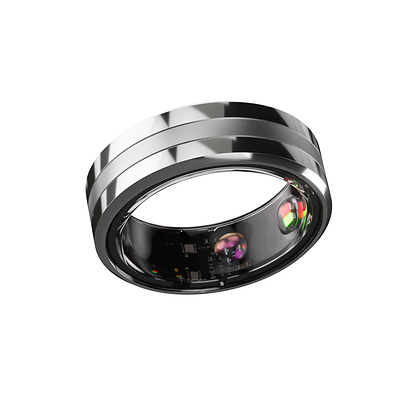
Signal Ring Price, Battery Life, and Release Date
Signal Ring is available for preorder in the United States for $399.
The package includes:
- The Signal Ring
- A ring sizing kit
- A portable charging case
- Access to the companion app
- Blood pressure tracking features
- Data export tools
Vital Signals expects the first units to ship in October 2026. The ring is planned in US sizes 5 through 13.
The company rates the battery for up to three days per charge. Meanwhile, the charging case can provide four extra charges.
Three days is not outstanding for a smart ring. Several competing models last much longer. Frequent charging could also create gaps in health records if users forget to wear the ring again.
Still, the portable case should make charging easier during travel. It also reduces the need to carry a separate charging cable everywhere.
Vital Signals says the ring will not require a monthly subscription. That is a welcome choice, since some wearable brands lock advanced health data behind paid plans.
How Signal Ring Compares With Other Smart Rings
The smart ring market already includes products from Oura, Samsung, RingConn, and Ultrahuman.
Most of those devices focus on:
- Sleep tracking
- Daily activity
- Recovery scores
- Heart rate
- Heart rate variability
- Skin temperature
- Stress monitoring
- Blood oxygen estimates
Signal Ring takes a different path. It treats blood pressure as its main feature rather than a secondary health metric.
That narrower focus may help it stand out. Many users already own a smartwatch that counts steps and tracks workouts. A ring built mainly for cardiovascular data could feel more useful.
Yet Signal Ring carries a greater burden of proof. Sleep and activity estimates are useful for general wellness, but blood pressure readings can influence serious medical decisions.
For that reason, users should wait for independent accuracy testing before relying on the ring for anything beyond personal trend tracking.
What the Company Says About Accuracy
Vital Signals says it tested the ring in a multi-site clinical study involving 451 people.
The company claims the device met the accuracy requirements of ISO 81060-2, a standard used for non-invasive blood pressure monitors.
That sounds promising. Still, the full study results were not included in the launch announcement. Independent researchers have not yet published a complete review of the retail version.
The Signal Ring has not received FDA review or clearance. The company also states that the product is not intended to diagnose, treat, cure, or prevent a medical condition.
So, users should continue using a validated upper-arm cuff for medical monitoring. They should also speak with a doctor before changing any treatment.
A ring reading can act as a useful signal. It should not act as the final answer.
Who Could Find the Signal Ring Useful?
Signal Ring could appeal to several groups of users.
People with a family history of hypertension may want more information about daily changes. Fitness-focused users may want to see how training, sleep, and recovery affect blood pressure.
People who dislike inflatable cuffs may also find the ring more comfortable. In the same way, users who travel often may appreciate a monitor that fits on a finger.
The ring may also appeal to people who enjoy health data and want to spot long-term trends.
Still, it is not the right choice for everyone. Anyone who needs clinically validated measurements should continue using an approved blood pressure monitor.
The $399 price also makes the ring a serious purchase. Early buyers will be paying for a new idea that still needs broader real-world proof.
My View on the Signal Ring
Signal Ring addresses a genuine problem. Blood pressure cuffs work well, but many people find them inconvenient. That inconvenience can lead to irregular monitoring.
A comfortable ring could make blood pressure tracking easier. It could show how readings change during sleep, work, exercise, meals, and stressful moments.
The lack of cuff calibration is especially interesting. If the technology performs as promised, it could remove one of the biggest barriers facing cuffless blood pressure devices.
Still, accuracy matters more than comfort. The three-day battery is average, and the $399 preorder price is high for a product without FDA clearance.
For now, the Signal Ring looks like a promising wellness tracker rather than a replacement for a medical-grade cuff. Independent testing will decide whether it becomes a useful health tool or another wearable with ambitious claims.
The concept is strong. The design is practical. Yet the final verdict will depend on real-world accuracy, long-term software support, and transparent clinical evidence.