
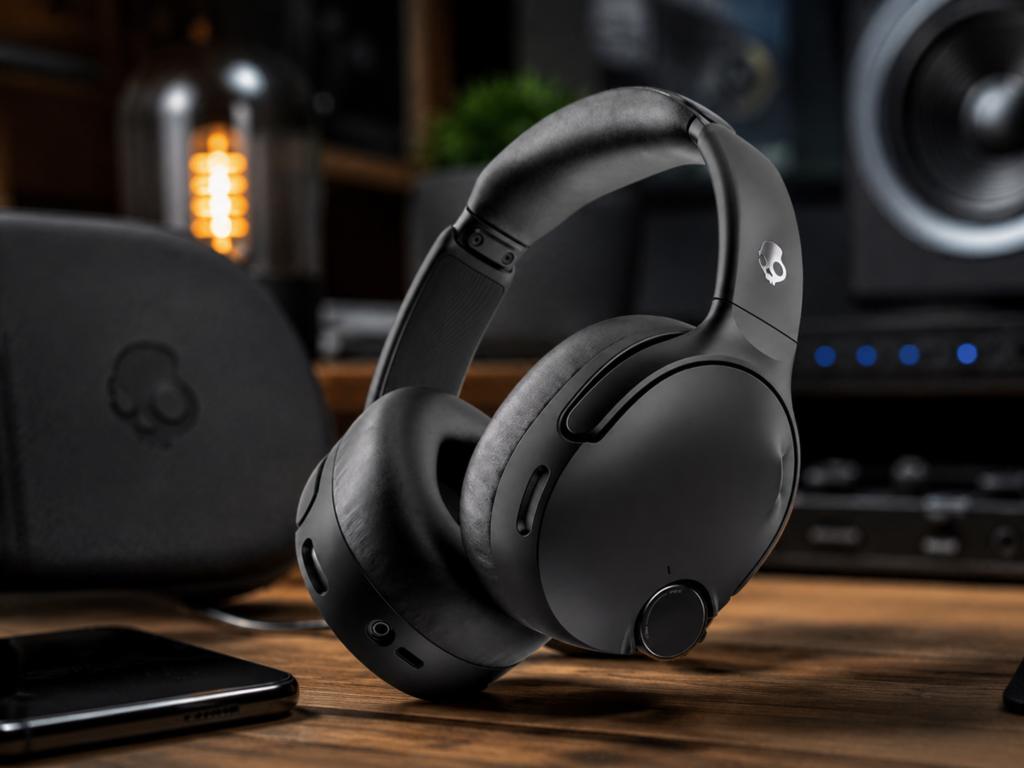
Skullcandy has introduced the Crusher 1080 ANC, a new pair of wireless over-ear headphones built around two very different audio identities. Skullcandy brings its intense, adjustable Crusher Bass system. Bose supplies the noise cancellation, spatial audio, sound processing, and voice pickup technology.
That partnership makes the Crusher 1080 ANC one of Skullcandy’s most ambitious headphone launches. The company is not abandoning the exaggerated bass that made the Crusher series popular. Instead, it is trying to make that bass sound cleaner, more controlled, and easier to enjoy in noisy places.
The Crusher 1080 ANC launches at $279.99 in the United States. Buyers can choose from True Black, Candy, Primer, and Cement finishes. At that price, the headphones sit above the Crusher ANC 2 and compete with several premium wireless models from Bose, Sony, Sennheiser, Beats, and JBL.
Still, Skullcandy is not trying to beat those brands by copying them. Its main advantage remains simple. The Crusher 1080 ANC does not just play deep bass. It creates a physical bass sensation that listeners can feel around the earcups.
Skullcandy and Bose Split the Audio Work
The “Sound by Bose” badge covers more than a basic sound preset. Crusher 1080 ANC uses four licensed Bose technologies:
- Bose QuietControl active noise cancellation
- Bose TrueSpatial audio with head tracking
- Bose WaveForm Audio Engine
- Bose SpeechClarity voice processing
Together, these systems target several common problems found in bass-heavy headphones. Strong low frequencies can cover vocals, guitars, dialogue, and smaller background details. High bass settings can also make the sound feel loose or muddy.
Bose WaveForm processing aims to keep the output more balanced as the volume and Crusher Bass levels change. Meanwhile, QuietControl handles outside noise, and SpeechClarity works on call quality.
The partnership does not turn the Crusher 1080 ANC into a Bose headphone with different branding. Skullcandy still controls the physical design, app, user controls, bass hardware, and overall character. Bose focuses on areas where past Crusher models had room for improvement.
Crusher Bass Is Still the Main Feature
Crusher Bass works differently from a normal bass boost inside an equalizer. The headphones use dedicated hardware to create pressure and vibration inside the earcups. Deep sounds can feel closer to a small subwoofer than a standard headphone driver.
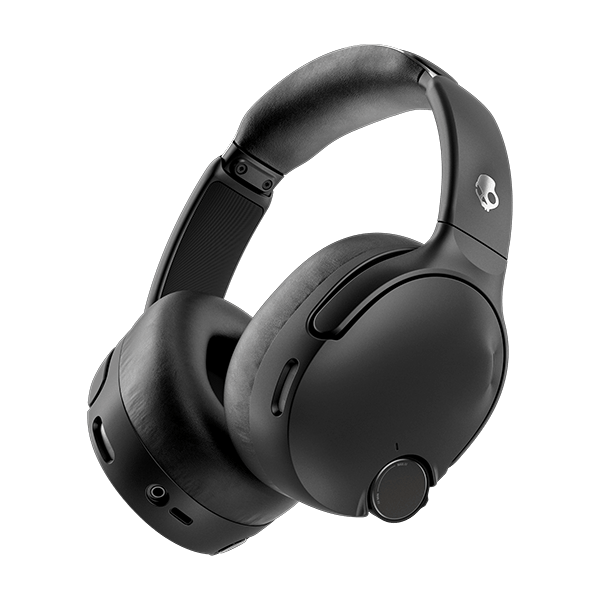
Users control the effect through a large wheel on the earcup. The Skullcandy app provides another way to adjust it. At a low setting, the headphones should deliver a more conventional listening experience. Turn the wheel higher, and kick drums, explosions, engines, and electronic bass lines gain far more physical impact.
For example, action films and racing games can feel more dramatic. Hip-hop and electronic tracks can sound larger and more energetic. At the same time, acoustic music and vocal-led recordings may work better with the bass effect reduced.
Skullcandy has fitted the Crusher 1080 ANC with redesigned drivers and a stiffer diaphragm. The goal is clearer sound with less distortion at higher volume levels. That change matters. More bass has little value when voices and instruments disappear behind it.
These Headphones Are Built for Excitement
The Crusher 1080 ANC is not aimed at listeners who want a flat studio sound. Skullcandy has built it for people who enjoy bold low frequencies, physical impact, and a more dramatic presentation.
That does not make the sound worse by default. It simply gives the headphones a clear purpose. Some buyers want precise tonal balance. Others want music, films, and games to feel bigger. Crusher has always served the second group.
In my view, this clear identity is one of the product’s strongest points. Many premium headphones now offer similar app controls, noise cancellation, and battery life. Few offer a bass system that feels this different from a standard driver setup.
Still, buyers should not pay extra for Crusher hardware when they plan to keep it switched off. A lighter pair of headphones with a more neutral tuning may suit those listeners better.
Bose QuietControl ANC Targets Travel Noise
Active noise cancellation has become common in premium headphones, but the quality still varies. Skullcandy’s choice to license Bose QuietControl gives the Crusher 1080 ANC a more proven base.
The system uses six microphones and adaptive processing. It listens to the surrounding environment and changes its response as the noise changes. This can help reduce the steady sound of aircraft cabins, buses, trains, air conditioners, and busy offices.
Users can switch between three main listening modes:
- Quiet Mode reduces surrounding noise
- Aware Mode lets more outside sound pass through
- ANC Off disables active noise processing
Aware Mode can help near traffic, inside stations, or during quick conversations. Quiet Mode suits flights, commuting, and focused work.
The interesting challenge lies in the interaction between ANC and Crusher Bass. The bass system creates physical movement inside each earcup. That movement can interfere with microphones and sound processing. Skullcandy says its engineers worked with Bose to keep the sensory bass separate from the rest of the audio output.
TrueSpatial Audio Adds Head Tracking
Crusher 1080 ANC includes Bose TrueSpatial audio with head tracking. The system creates a wider sound field and adjusts the perceived position of audio as the listener moves their head.
For films, this can make dialogue and effects feel more fixed in front of the listener. For games, it can create a broader sense of space around footsteps, vehicles, and environmental sounds. Live music may gain a clearer sense of stage position too.
Still, spatial audio will not suit every track. Some listeners prefer standard stereo, mainly for older recordings or music mixed around a fixed left-and-right presentation. The Skullcandy app lets users change listening modes, so spatial processing does not need to stay active.
The Crusher 1080 ANC is also the first non-Bose headphone announced with Bose TrueSpatial technology. That makes the launch more interesting than a routine Crusher update. It shows Bose is prepared to place some of its newer audio systems inside another company’s consumer headphones.
Battery Life Reaches Up to 60 Hours
Skullcandy rates the Crusher 1080 ANC for up to 60 hours of listening with active noise cancellation switched off. The figure drops to 50 hours with ANC running.
For a person listening five hours each day, the calculation looks like this:
- 60 hours ÷ 5 hours per day = 12 days with ANC off
- 50 hours ÷ 5 hours per day = 10 days with ANC on
Real battery life will change with volume, Crusher Bass intensity, call use, spatial audio, temperature, and wireless conditions. Even so, the official figures place the headphones among the longer-lasting premium ANC models.
Rapid Charge adds up to four hours of listening from a 10-minute charge. That feature can prove useful before a commute, flight, or long work session.
A USB-C to USB-C cable comes in the box. The headphones also support wired listening through a 3.5mm connection.
Wireless Features Cover Work and Travel
The Crusher 1080 ANC supports Bluetooth 5.3, Bluetooth LE Audio, and Auracast. Auracast can connect compatible headphones to shared audio broadcasts in public or private spaces. Adoption is still limited, but support gives the headphones stronger long-term compatibility.
Multipoint pairing lets the headphones stay connected to two devices at once. For example, a user can watch a video on a laptop and answer a call from a phone without reconnecting the headphones.
Other features include:
- Wear detection with automatic pause
- Google Fast Pair
- Automatic device reconnection
- Low-latency audio
- Custom button controls
- Music, Movie, and Podcast EQ modes
- A custom five-band equalizer
- Personal Sound hearing profiles
- Voice sidetone during calls
- A wired 3.5mm audio option
The wired connection remains useful on aircraft, older computers, game controllers, and devices without reliable Bluetooth support.
The launch arrives during a busy period for consumer hardware. Audio companies are expanding spatial sound and AI-assisted processing, and camera fans are tracking stories such as the Canon EOS R8 Mark II rumors. In both categories, buyers now expect meaningful upgrades rather than small annual changes.
Weight Could Be the Main Drawback
The Crusher 1080 ANC weighs 374.2 grams. That is heavy for a pair of wireless travel headphones.
The extra weight comes from the bass hardware, battery, microphones, folding structure, and internal electronics. Good headband padding and soft ear cushions can spread that weight, but they cannot remove it.
People who wear headphones for one or two hours may not mind. Users who listen through a full working day may feel pressure around the head or neck.
The headphones fold flat and collapse for storage. A roll-top travel bag comes in the package. A rigid case would provide stronger protection inside luggage, though the included bag should help prevent scratches.
Skullcandy does not list an official water-resistance rating for the Crusher 1080 ANC. Protection against sweat or rain cannot be confirmed. For that reason, buyers should treat them as lifestyle and travel headphones rather than a dedicated sports model.
Is the $279.99 Price Fair?
The Crusher 1080 ANC costs $40 more than the Crusher ANC 2 at their standard United States prices.
The calculation is straightforward:
$279.99 − $239.99 = $40
That extra cost covers the wider Bose technology package, updated drivers, six-microphone ANC system, TrueSpatial head tracking, and newer wireless features.
For dedicated Crusher fans, the price looks reasonable. Better noise cancellation and clearer tuning address two of the series’ biggest weaknesses. The long battery life and modern connectivity strengthen the package too.
By comparison, listeners who mainly want balanced music playback have many choices near this price. Some rivals weigh less. Others offer stronger codec support, more understated tuning, or firmer protective cases.
Still, none of those points erase the main reason to buy the Crusher 1080 ANC. It offers a physical low-frequency effect that most premium headphones cannot reproduce.
Why the Crusher 1080 ANC Matters
The Crusher 1080 ANC marks a useful change in Skullcandy’s strategy. The company is keeping the bold bass that built the Crusher name, but it is pairing that feature with licensed technology from a brand known for noise cancellation and audio processing.
That pairing makes sense. Skullcandy already had a feature that stood out. It did not need to turn Crusher into another neutral pair of premium headphones. It needed cleaner sound, stronger ANC, better calls, and more polished processing.
Bose provides the technology for those areas. Skullcandy keeps the personality.
The weight remains a concern, and the price now sits firmly in premium territory. Yet the feature list feels focused rather than random. Crusher 1080 ANC combines adjustable sensory bass, adaptive noise cancellation, spatial audio, long battery life, and a full set of daily wireless features.
For listeners who want to feel music, films, and games rather than simply hear them, the Crusher 1080 ANC has a clear appeal.