
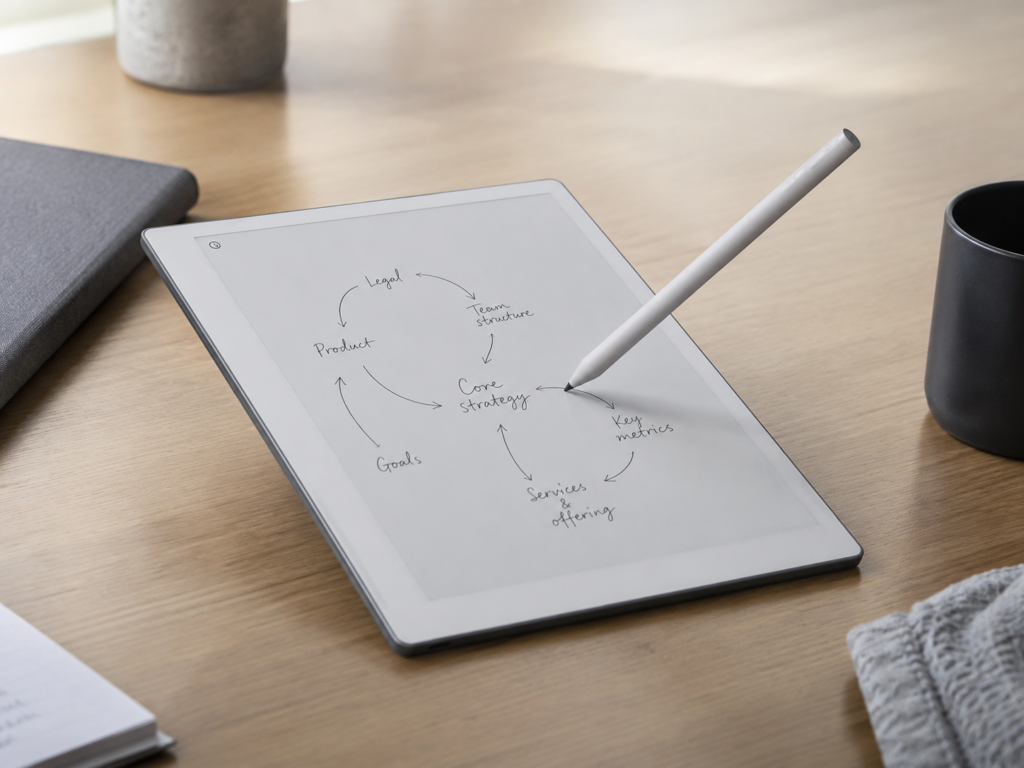
The reMarkable 2 had a rare run for a modern tablet. It launched in 2020 and remained relevant for years, largely thanks to its simple purpose. It gave people a quiet place to write, read, and mark up documents without games, social media, or constant notifications.
Now, reMarkable Paper Pure has taken its place.
The new model keeps the familiar 10.3-inch black-and-white format. Still, several changes make it better suited to daily work. Paper Pure brings faster hardware, stronger screen contrast, 32GB of storage, a lighter body, and battery life rated for up to three weeks.
At first, it may look like a small update. In practice, the changes target the areas where reMarkable 2 had started to show its age.
Paper Pure Becomes the Main Monochrome reMarkable Tablet
Paper Pure is now the company’s standard full-size black-and-white writing tablet. It replaces reMarkable 2 rather than sitting beside it as a separate edition.
The tablet focuses on a fairly short list of tasks:
- Writing handwritten notes
- Reviewing and marking up PDFs
- Reading EPUB files
- Planning projects
- Sketching diagrams
- Converting handwriting into typed text
- Organizing pages with folders and tags
- Sharing notes through email
- Syncing files with mobile and desktop apps
That narrow focus remains one of its biggest strengths.
A normal tablet can handle video, games, calls, apps, and web browsing. Paper Pure leaves most of those features out. As a result, it feels closer to a paper notebook than a small computer.
That choice will not suit everyone. Some buyers want one device for every task. Yet people who get distracted easily may appreciate a screen that does not keep pulling them toward another app.
The Screen Keeps the Same Size but Looks Clearer
Paper Pure uses a 10.3-inch Canvas display based on E Ink Carta 1300. The resolution is 1,872 x 1,404 pixels, with a density of 226 pixels per inch.
The screen size remains familiar, so current reMarkable users will not need to adjust to a different page format. Instead, the main improvements involve contrast and response.
reMarkable says Paper Pure delivers 20% higher contrast than reMarkable 2. In daily use, black lines should appear darker, and the page background should look cleaner.
That change matters more than it may sound.
A writing tablet spends most of its time showing plain text, handwriting, and simple drawings. Better contrast can make notes easier to scan and PDF text less tiring to read. It can also help smaller pen strokes stand out more clearly.
Writing latency is rated at 21 milliseconds. The visual distance between the pen tip and the digital ink is about 0.84 mm.
In practice, both details should help handwriting feel more direct. Digital ink needs to appear close to the nib. Any obvious delay can make the pen feel disconnected from the page.
Still, Paper Pure has no built-in reading light. It works best near a window, under a desk lamp, or in a well-lit room.
For night use, that remains a real weakness. Anyone who often writes in bed or reads during flights will need an external light or a different reMarkable model with screen illumination.
Faster Hardware Should Reduce Small Delays
The reMarkable 2 remained useful for a long time, but its older processor and limited memory could feel slow with large files.
Paper Pure uses a 1.7 GHz dual-core Cortex-A55 processor and 2GB of LPDDR4 memory. By comparison, reMarkable 2 had a 1.2 GHz dual-core processor and 1GB of LPDDR3 memory.
reMarkable says the new tablet runs 50% faster.
That figure should translate into quicker menus, smoother page changes, faster searches, and shorter loading times for large documents. It should also make basic actions feel less interrupted.
Paper Pure is not built for heavy apps, and it does not need laptop-level power. Even so, slow file opening can break concentration during a meeting or study session.
So, the processor upgrade matters most in small moments. A notebook feels better when it responds the instant someone needs it.
Storage Increases From 8GB to 32GB
Storage gets one of the biggest changes.
The reMarkable 2 included 8GB of internal space. Paper Pure raises that amount to 32GB. Some of the storage is reserved for the operating system, but users still get far more room for notebooks, books, and documents.
For casual note-taking, 8GB was often enough. For larger PDF collections, it could become restrictive.
For example, scanned textbooks, technical manuals, research papers, and illustrated reports can take up much more space than simple handwritten pages. A user with several years of work could eventually need to remove old files or rely more heavily on cloud storage.
Paper Pure gives those users more breathing room.
Students can keep material from several courses on the device. Managers can store meeting records and project notes. Researchers can carry a larger reference library without checking storage every few weeks.
There is no microSD card slot. So, the internal capacity cannot be expanded later. The move to 32GB makes the new model a better long-term choice.
The New Marker Charges From the Tablet
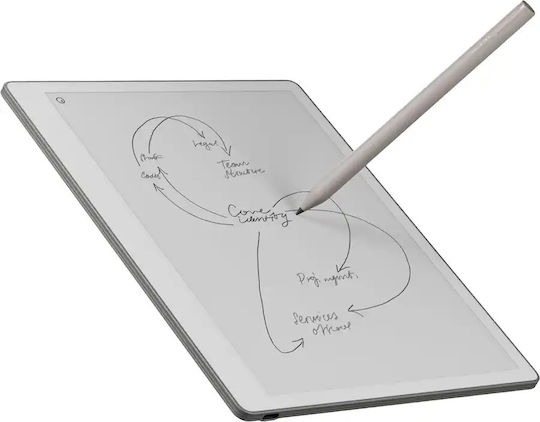
Paper Pure introduces a new active Marker system.
The pen attaches magnetically to the side of the tablet. It charges in that position, which removes the need for a separate pen cable.
The standard Marker comes with the device. Marker Plus adds a textured finish and an eraser on the opposite end.
This setup is practical during travel. The pen stays beside the tablet and receives power at the same time.
Still, the new system creates a compatibility issue. Markers made for reMarkable 2 do not work with Paper Pure. Paper Pure Markers do not work with the older tablet either.
That may frustrate current owners. Someone who already bought Marker Plus for reMarkable 2 cannot carry it over to the new model.
The old passive Marker never needed charging. By comparison, the active pen adds another battery to manage. Yet the magnetic charging system should keep the process simple for most users.
Battery Life Now Reaches Up to Three Weeks
Paper Pure includes a 3,820 mAh battery. reMarkable rates it for up to three weeks of use, based on around one hour of note-taking per day.
Real battery life will vary. Wi-Fi activity, file size, syncing, and daily writing time all affect power use.
Even so, Paper Pure should last much longer than a standard tablet.
Charging from zero to 90% takes about 75 minutes through USB-C. The device supports both 2.4 GHz and 5 GHz Wi-Fi networks.
That long battery life fits the product well. A digital notebook should stay ready inside a work bag for several days. It should not become another device that needs charging every evening.
At the same time, focus is not only about the tablet. Many people pair a writing device with headphones in busy offices or shared spaces. Our coverage of the Skullcandy Crusher 1080 ANC and its Bose noise-cancelling technology looks at another product designed around more controlled listening and fewer outside distractions.
The Body Is Lighter but No Longer as Thin
Paper Pure measures 228.1 x 187.1 x 6 mm and weighs about 360 grams.
The reMarkable 2 weighed roughly 403.5 grams and measured 4.7 mm thick. So, the new tablet is lighter, though it is slightly thicker.
The material choice has changed too. Paper Pure uses more polymer in its construction, including recycled material in the rear shell.
Some users may miss the slim metal body of reMarkable 2. It looked refined and felt unusually thin in the hand.
Paper Pure takes a more practical direction. Its lower weight should make long reading sessions more comfortable. The internal construction gives repair specialists better access to parts such as the battery.
That matters for a device people often keep for years. Once a tablet holds a large archive of notes, replacing it becomes less appealing.
reMarkable OS Keeps the Experience Focused
Paper Pure runs reMarkable OS, a Linux-based platform built around handwritten work and documents.
Users can create notebooks, select page templates, add layers, move handwritten content, draw shapes, and organize files through folders and tags. Handwriting can be converted into typed text, which helps with meeting records, study notes, and early drafts.
The tablet supports PDF and EPUB imports. It can export pages as PDF, PNG, and SVG files.
Cloud connections include:
- Google Drive
- Microsoft OneDrive
- Dropbox
Users can send pages by email and mirror the screen during presentations or meetings. Mobile and desktop apps provide access to synced files away from the tablet.
Some features require the Connect subscription. These can include expanded cloud storage, handwriting search, extra templates, and broader editing tools in the companion apps.
Paper Pure still works without a paid plan. Yet regular users should review the subscription features before buying. Over several years, the service can add a noticeable amount to the total cost.
Who Is Paper Pure Made For?
Paper Pure suits people who enjoy handwriting but want their notes stored digitally.
It fits several types of users:
- Students who annotate reading material
- Managers who take handwritten meeting notes
- Researchers who review long PDF documents
- Writers who plan ideas away from a laptop
- Designers who sketch early concepts
- Professionals who want fewer screen distractions
- Owners of the first reMarkable tablet
For new buyers, Paper Pure is a clear step up from reMarkable 2. It has more storage, faster hardware, better contrast, longer battery life, and a lighter body.
For current reMarkable 2 owners, the choice is less simple.
The display size remains the same. There is still no built-in light. Older Markers are not compatible either.
So, a working reMarkable 2 does not suddenly become obsolete. It can still handle notes and PDFs well.
The upgrade makes more sense for users who have nearly filled the 8GB storage, regularly open large files, or feel frustrated by slow menus.
A Practical Replacement for an Aging Favorite
Paper Pure does not change the core idea behind reMarkable 2. It still offers a quiet place to write, read, and organize documents without a long list of apps competing for attention.
The new model improves the areas that needed work. Storage rises from 8GB to 32GB. The processor is faster. Screen contrast is stronger. Battery life improves, and the body weighs less.
There are still compromises. The missing frontlight limits dark-room use. Older accessories may not work, and some software tools require a subscription.
That said, Paper Pure feels like a sensible replacement for a six-year-old tablet. It keeps the familiar writing experience, then removes several limits that had started to make the older model feel dated.
For buyers who want a digital notebook rather than a multimedia tablet, reMarkable Paper Pure now stands as the company’s main black-and-white option.