HP OmniBook X 17 (2026) review
This review measures the HP OmniBook X 17 (2026) against the full 53-spec sheet we track for laptops, comparing it like for like with the 110 other models in our database. It earns a VS Score of 47 out of 100 — the weighted result of every verified specification measured against the class average.
On the spec sheet it is strongest in audio & camera and weakest in design. Its clearest single advantage over the class average: 11.28 GB more RAM — 24 GB vs 12.72 GB (avg). None of our retail partners currently lists the HP OmniBook X 17 (2026), so availability may be limited; a missing price never affects the VS Score. A transparency note: this spec sheet is 89% complete. Anything unverified shows as Unknown and is left out of the score — we never estimate a missing value.
Category strengths
Where the HP OmniBook X 17 (2026) beats the average
- 11.28 GB more RAM ?24 GB vs 12.72 GB (avg)
- 1.5 more USB-A ports ?3 vs 1.5 (avg)
- Has touchscreen ?
- 9.9 Wh more battery capacity ?76 Wh vs 66.1 Wh (avg)
- Has numeric keypad ?
- 2.67 " more screen size ?17.3 " vs 14.63 " (avg)
- Has IR camera (Windows Hello) ?
- Has Thunderbolt / USB4 ?
- 1.31 mm less thickness ?15.2 mm vs 16.51 mm (avg)
- Has HDMI port ?
Where the HP OmniBook X 17 (2026) trails the average
- 0.8 kg more weight ?2.34 kg vs 1.54 kg (avg)
- No fingerprint reader ?
- 571.96 GB less SSD storage ?2,048 GB vs 2,619.96 GB (avg)
- 261.98 px less resolution ?1,080 px vs 1,341.98 px (avg)
- No anti-glare display ?
- No dedicated graphics ?
- 17.3 Hz less refresh rate ?60 Hz vs 77.3 Hz (avg)
- 1.89 less CPU cores ?8 vs 9.89 (avg)
- No upgradeable RAM ?
- 1,133.69 less Geekbench score ?9,419 vs 10,552.69 (avg)
Editor’s note
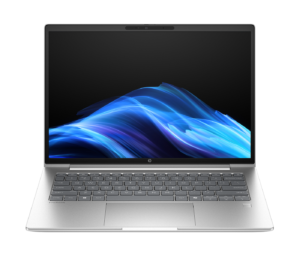
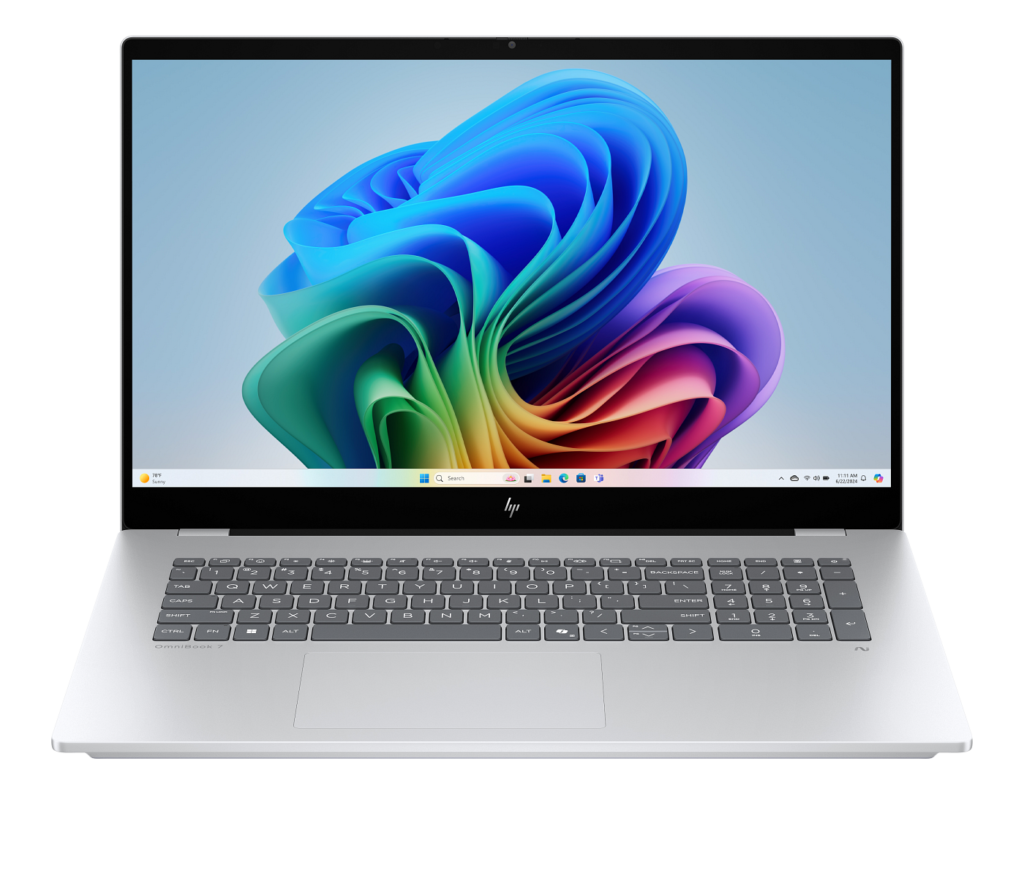
The OmniBook X 17 is the laptop that used to be the HP Envy 17, and its purpose has not changed: give people a large screen without buying a desktop. The 2026 refresh moves to Intel's Panther Lake Core Ultra 5 325 with 24GB of LPDDR5X and a 2TB SSD, in a 2.34kg body 15.2mm thick.
At 17.3 inches there is genuine room to work — two documents side by side, a timeline and a preview window, a spreadsheet without horizontal scrolling — and there is space for a numeric keypad. The panel is a touchscreen covering 100% sRGB, which is better colour than most large mainstream laptops manage. Connectivity is strong: two USB-C with Thunderbolt, three USB-A, HDMI, Wi-Fi 7 and Bluetooth 6, and a 76Wh battery with 100W charging.
The compromises are all about the screen and the size. For a 17.3-inch display, 1920×1080 in a 16:9 ratio is a low resolution — about 127 pixels per inch, so text and interface elements look large and slightly soft, and there is less vertical space than a 16:10 panel of the same diagonal. It also runs at 60Hz. Graphics are Intel's integrated Xe3, so this is not a gaming or 3D machine despite its size. And 2.34kg plus a 17-inch footprint means it will not fit most laptop bags or an economy tray table; there is no SD card reader and no fingerprint reader either, though IR face unlock is present.
Buy it if you want maximum screen area in something that still folds shut, and you work mostly in documents, browsers and video. Skip it if you travel, need a sharp high-resolution display, or want GPU performance.
Specifications
Quality bars are generated automatically against 110 other laptops.
Design
A lighter laptop is easier to carry around.
A thinner laptop is more portable.
The chassis material (e.g. aluminium).
The keys are illuminated for use in the dark.
Sign in quickly and securely with a fingerprint.
The screen folds back or detaches to work as a tablet.
A dedicated number pad speeds up data entry.
The colour options the laptop is sold in.
Display
A larger screen is better for productivity and media.
A matte, anti-glare finish reduces reflections in bright rooms.
The vertical pixel count; higher is sharper.
A higher refresh rate is smoother for scrolling and gaming.
Brighter screens are easier to read in bright rooms.
Higher colour-gamut coverage means more accurate, vivid colour.
The display technology (e.g. OLED, IPS).
The proportional relationship between screen width and height.
OLED panels offer deeper blacks and better contrast than LCD.
The screen responds to touch input.
Performance
The CPU model powering the laptop.
More cores help demanding workloads.
More RAM improves multitasking.
The memory standard (e.g. LPDDR5X); newer is faster.
The memory can be replaced or expanded later.
More solid-state storage holds more files and apps.
The GPU handling graphics and gaming.
A separate GPU greatly outperforms integrated graphics.
More video memory helps gaming and creative workloads.
A synthetic score estimating overall CPU performance.
A CPU rendering benchmark; higher scores mean faster multi-threaded work.
The neural engine's trillions-of-operations-per-second rating for on-device AI.
The most memory the laptop can be configured or upgraded with.
The SSD standard (e.g. PCIe 4.0 NVMe); newer is faster.
Supports very fast Thunderbolt or USB4 connections.
Battery
A larger battery generally lasts longer.
Estimated hours of use on a charge.
Higher wattage recharges the battery faster.
Charge over a standard USB-C cable / power bank.
Charges quickly from empty.
Connectivity
More USB-C ports add flexibility.
Standard USB-A ports for older peripherals.
Connect to external displays without an adapter.
Read camera memory cards directly.
A wired network port for a stable connection.
A 3.5mm jack for wired headphones and headsets.
Supports faster, less congested Wi-Fi 6E.
The Wi-Fi generation supported; later is faster.
A newer Bluetooth version improves range and efficiency.
A higher resolution webcam looks better on calls.
Audio & camera
A Full-HD webcam is much sharper than 720p.
Log in by face with an infrared camera.
Two speakers deliver richer, more immersive sound.
More microphones improve voice pickup on calls.
Software
The OS the laptop ships with.
How the VS Score works — and what it can’t tell you
Every measurable spec is scored against the average of all the laptops we track: matching the class average scores 50, clearly beating it climbs towards 100, and each spec counts according to an editorial weight that reflects real-world impact — a battery-capacity gap moves the score far more than a colour-options list. The quality bars on the spec cards above show where this model sits inside the full range for its class, and the overall VS Score rolls every weighted result into one number.
Unknown values are never estimated. A spec this product doesn’t report simply drops out of its scoring — it isn’t penalised with a guess — but a thinner spec sheet does mean a score built on fewer data points, which is why completeness is disclosed under About this data.
Most importantly: a spec-sheet lead is not the same as a better product. Megapixels, gigahertz and benchmark points describe capacity, not experience — image processing, software optimisation, thermals, haptics and ergonomics decide how a device actually feels, and no table captures reliability or long-term support quality. Treat the VS Score as a structured summary of what can be measured, not a substitute for your own priorities.
About this data
- Specifications are compiled from each manufacturer’s official spec sheet, cross-checked against trusted specification databases, and normalised into one schema so identical things are compared identically.
- Specifications last verified July 27, 2026.
- Data completeness: 47 of the 53 specs in this category are verified (89%). Anything we could not verify is shown as Unknown — never estimated — and is excluded from the score.
- Prices and availability come from live retailer feeds via our shopping partners and refresh throughout the day; a missing price means no partner currently lists the product, not that it is discontinued.
- Want the full picture? Our editorial guidelines explain how we research products, weight the scores and stay independent.
- Spotted an error in a spec? Tell us and we will correct the sheet.
Laptops with similar specs to the HP OmniBook X 17 (2026)
Ratings & reviews
No reviews yet. Be the first to share your experience.
The bottom line
The HP OmniBook X 17 (2026) earns a VS Score of 47, a solid mid-pack result among the 111 laptops we compare here. It stands out for 11.28 GB more RAM, 1.5 more USB-A ports and has touchscreen. Just be aware of 0.8 kg more weight and no fingerprint reader before you buy. Weigh those trade-offs against what matters most to you.
The VS Score is generated automatically from the weighted specifications above, measured against all other laptops in our database. Treat it as a shortlisting guide — not a substitute for your own priorities.