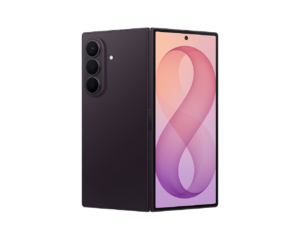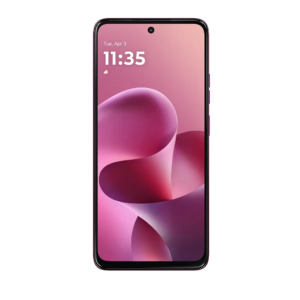
Huawei nova 15 Max review
This review measures the Huawei nova 15 Max against the full 99-spec sheet we track for smartphones, comparing it like for like with the 106 other models in our database. It earns a VS Score of 40 out of 100 — the weighted result of every verified specification measured against the class average.
On the spec sheet it is strongest in display and weakest in security & software. Its clearest single advantage over the class average: 2,149.56 mAh more battery capacity — 8,500 mAh vs 6,350.44 mAh (avg). None of our retail partners currently lists the Huawei nova 15 Max, so availability may be limited; a missing price never affects the VS Score. A transparency note: this spec sheet is 67% complete. Anything unverified shows as Unknown and is left out of the score — we never estimate a missing value.
Category strengths
Where the Huawei nova 15 Max beats the average
- 2,149.56 mAh more battery capacity ?8,500 mAh vs 6,350.44 mAh (avg)
- 1,111.19 nits more peak brightness ?4,000 nits vs 2,888.81 nits (avg)
- 68.19 GB more internal storage ?256 GB vs 187.81 GB (avg)
- Has Wi-Fi 7 support ?
- 376.17 px more resolution ?2,756 px vs 2,379.83 px (avg)
- Has stereo speakers ?
- Has OLED display ?
- Has Wi-Fi 6 support ?
- Has NFC ?
- 51.48 ppi more pixel density ?444 ppi vs 392.52 ppi (avg)
Where the Huawei nova 15 Max trails the average
- No 5G support ?
- 849,390.06 less AnTuTu benchmark ?808,133 vs 1,657,523.06 (avg)
- No IP68 water & dust resistance ?
- No optical image stabilization ?
- 13.95 MP less front camera ?8 MP vs 21.95 MP (avg)
- 19.77 MP less main camera ?50 MP vs 69.77 MP (avg)
- No in-display fingerprint ?
- No proximity sensor ?
- 142.22 fps less slow-motion video ?30 fps vs 172.22 fps (avg)
- 14.36 W less wired charging ?40 W vs 54.36 W (avg)
Editor’s note
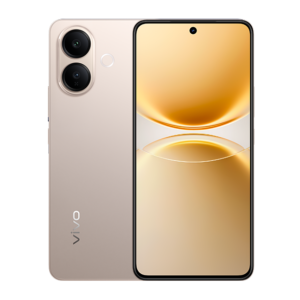
The Huawei nova 15 Max is unapologetically about battery life. It packs an enormous 8500mAh cell — far larger than the 4500-5000mAh most phones settle for — so two-day use is realistic for many people, and heavy users can still get through a long day with room to spare. If running out of charge is your recurring frustration, this is the phone answering that complaint directly.
The screen backs up the endurance story with a 120Hz OLED, 2160Hz PWM dimming for eye comfort and a very bright 4000-nit peak. Storage is 256GB with 8GB of RAM, cameras are a practical dual 50MP arrangement with an 8MP selfie, and charging is 40W wired.
There are real caveats, and they are mostly about the software and platform. This is a Huawei device running EMUI 14.2 without Google Mobile Services, so apps come from Huawei's AppGallery and there is no Gmail, Maps or Play Store out of the box. Huawei also does not publish full chipset details for this model, so raw performance is something of an unknown quantity, and it is sold primarily in China.
A side-mounted fingerprint sensor and full satellite-navigation support round it out.
Buy the nova 15 Max if maximum battery life is your single biggest priority and you are already comfortable inside Huawei's ecosystem. Avoid it if you depend on Google apps, want transparent performance figures, or need broad global band support and warranty — the missing Google services alone will be a dealbreaker for most buyers outside its home market.
Specifications
Quality bars are generated automatically against 106 other smartphones.
Design
A lighter device is more comfortable to hold and carry for long periods.
A thinner device is easier to hold and slip into a pocket.
A narrower phone is easier to use one-handed.
The vertical dimension of the device.
The primary frame and back materials of the device.
The device is protected against dust and submersion in water.
Reinforced glass (e.g. Gorilla Glass) resists scratches and cracks.
The device works with an active stylus pen.
The colour options the phone is sold in.
Display
A larger screen is better for media and multitasking.
The vertical pixel count; higher means a sharper image.
More pixels per inch produce crisper text and images.
A higher refresh rate produces smoother motion and scrolling.
How often the screen registers touches; higher feels more responsive.
Higher peak brightness is easier to read in direct sunlight.
A higher ratio means slimmer bezels and a more immersive front.
The underlying panel technology (e.g. LTPO AMOLED).
The proportional relationship between screen width and height.
OLED panels offer deeper blacks and better contrast than LCD.
Displays a wider range of colours and brightness in supported content.
Shows time and notifications while the screen is idle.
The reinforced glass protecting the screen (e.g. Gorilla Glass Victus 2).
The ratio between the brightest white and darkest black.
How many bits encode each colour; more means smoother gradients.
Supports Dolby Vision HDR for richer, scene-by-scene colour and contrast.
Higher PWM dimming frequency is easier on the eyes at low brightness.
Performance
The system-on-chip that powers the device.
The graphics processor handling games and visuals.
More RAM keeps more apps running smoothly at once.
More storage holds more apps, photos and files.
The storage standard (e.g. UFS 4.0); newer is faster.
A higher clock speed generally means faster processing.
More cores help with multitasking and demanding apps.
A smaller process is more power-efficient and runs cooler.
A synthetic score estimating overall performance.
Multi-core CPU benchmark score; higher is faster.
Single-core CPU benchmark score; higher is faster.
A GPU/graphics benchmark score; higher is faster.
The memory standard (e.g. LPDDR5X); newer is faster.
A higher graphics clock generally means faster gaming performance.
More last-level cache can improve processor efficiency.
Storage can be expanded with a memory card.
Battery
A larger battery generally lasts longer between charges.
Higher wattage charges the battery faster over a cable.
Higher wattage charges the battery faster wirelessly.
How long a full charge takes; lower is better.
The phone can wirelessly charge other devices.
Newer silicon-carbon cells pack more capacity into the same space.
The battery chemistry (e.g. Li-Po, Li-Ion).
The battery can be removed or replaced by the user.
Rated hours of voice calls on a charge.
Rated hours of idle standby on a charge.
Cameras
A higher megapixel count can capture more detail.
A lower f-number lets in more light for better low-light shots.
A larger sensor captures more light and detail.
The model of the main camera sensor (e.g. Samsung ISOCELL HP2).
Captures a wider field of view for landscapes and groups.
Enables closer, higher-quality zoom shots.
A higher resolution front camera improves selfies and video calls.
Magnifies subjects without losing detail.
OIS compensates for hand shake for sharper photos and steadier video.
The highest video resolution the device can record.
Captures ultra-high-resolution 8K footage.
A higher frame rate enables smoother slow-motion clips.
Saves unprocessed photos for more editing flexibility.
How many rear camera modules the phone has.
A lower f-number lets in more light for selfies.
The front camera can record 4K video.
Larger pixels capture more light for better low-light shots.
Connectivity
Connects to faster 5G mobile networks.
How many physical SIM cards the device accepts.
Supports a built-in digital SIM alongside or instead of a physical one.
Supports faster, more efficient Wi-Fi 6 networks.
Supports the latest, fastest Wi-Fi 7 standard.
A newer Bluetooth version improves range and efficiency.
Enables contactless payments and quick pairing.
A reversible, widely compatible charging and data port.
The USB data-transfer standard of the port; later is faster.
The satellite positioning systems the device can use; more means faster, more accurate location.
Enables precise spatial location for tracking and digital car keys.
Has a built-in FM radio receiver.
An IR blaster to control TVs and appliances.
Connect USB drives and accessories directly to the phone.
Radiofrequency energy absorbed by the head; lower is better.
Radiofrequency energy absorbed by the body; lower is better.
Audio
Two speakers deliver richer, more immersive sound.
Lets you use wired headphones without an adapter.
Adds spatial, three-dimensional audio in supported content.
Plays back high-resolution audio above CD quality.
Security & software
Unlock with a fingerprint sensor built into the screen.
Unlock the device by scanning your face.
How many years of OS upgrades the maker promises.
Send messages via satellite when off the mobile grid.
The software platform the device runs.
Sensors
Detects motion and orientation for auto-rotate and steps.
Senses rotation for gaming, photography and VR.
A magnetometer for navigation and maps.
Measures air pressure for altitude and weather.
Turns the screen off during calls when held to the ear.
How the VS Score works — and what it can’t tell you
Every measurable spec is scored against the average of all the smartphones we track: matching the class average scores 50, clearly beating it climbs towards 100, and each spec counts according to an editorial weight that reflects real-world impact — a battery-capacity gap moves the score far more than a colour-options list. The quality bars on the spec cards above show where this model sits inside the full range for its class, and the overall VS Score rolls every weighted result into one number.
Unknown values are never estimated. A spec this product doesn’t report simply drops out of its scoring — it isn’t penalised with a guess — but a thinner spec sheet does mean a score built on fewer data points, which is why completeness is disclosed under About this data.
Most importantly: a spec-sheet lead is not the same as a better product. Megapixels, gigahertz and benchmark points describe capacity, not experience — image processing, software optimisation, thermals, haptics and ergonomics decide how a device actually feels, and no table captures reliability or long-term support quality. Treat the VS Score as a structured summary of what can be measured, not a substitute for your own priorities.
About this data
- Specifications are compiled from each manufacturer’s official spec sheet, cross-checked against trusted specification databases, and normalised into one schema so identical things are compared identically.
- Specifications last verified July 26, 2026.
- Data completeness: 66 of the 99 specs in this category are verified (67%). Anything we could not verify is shown as Unknown — never estimated — and is excluded from the score.
- Prices and availability come from live retailer feeds via our shopping partners and refresh throughout the day; a missing price means no partner currently lists the product, not that it is discontinued.
- Want the full picture? Our editorial guidelines explain how we research products, weight the scores and stay independent.
- Spotted an error in a spec? Tell us and we will correct the sheet.
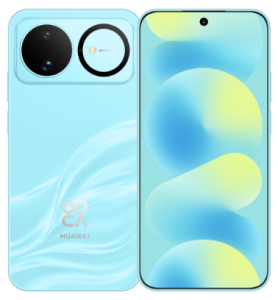
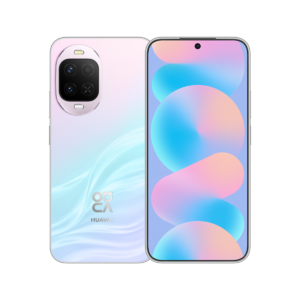
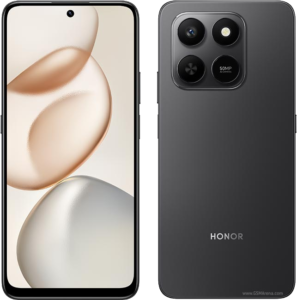
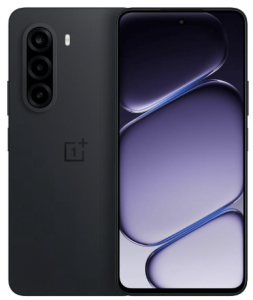
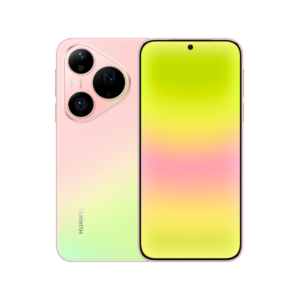
Smartphones with similar specs to the Huawei nova 15 Max

Ratings & reviews
No reviews yet. Be the first to share your experience.
The bottom line
The Huawei nova 15 Max earns a VS Score of 40, trailing most of the 107 smartphones we compare here, at least on the spec sheet. It stands out for 2,149.56 mAh more battery capacity, 1,111.19 nits more peak brightness and 68.19 GB more internal storage. Just be aware of no 5G support and 849,390.06 less AnTuTu benchmark before you buy. Weigh those trade-offs against what matters most to you.
The VS Score is generated automatically from the weighted specifications above, measured against all other smartphones in our database. Treat it as a shortlisting guide — not a substitute for your own priorities.